Showing posts with label Tradition. Show all posts

Tuesday, October 4, 2022

May You Emerge Safely On The Other Side

The First To Arise, a wetplate photograph by Shane Balkowitsch, 2016. 
Uŋmáčhetkiya Yakpáptapi Kta Héčha
May You Safely Emerge On The Other Side

By Dakota Wind

Tȟokéya Inážiŋla tókhi éyaye hé? Thíyata oníčilapelo. Uŋmá ečhíyataŋhaŋ iyáye. Waŋná Čhaŋkú Wanáǧi maní. Čhaŋkú Tȟó maní. Tókša akhé waŋčhíyaŋkiŋ kte. 


Where have you gone First To Arise? They have called you home. You have gone on to the other side. Now you walk the Spirit Road. You walk on the Blue Road. I will see you again for certain. 


Lekší Kevin Locke loved the land. When he was home he regularly ran on the prairie steppe above the floodplain of the Missouri River, overlooking Lake Oahe. His home, in the community of Wakpala, S.D. overlooks the water. Day or night, light from the sun or moon stretches across the water and illuminates his home. During the darkest nights and coldest days of winter, his home is filled with earnest love for family and land.


One of his favorite places to run was at an old Sahnish (Arikara) village site close to his home. He wondered if it would be a good place to camp in the old days and looked at the site as though for the first time. Lo! There, he saw the evidence of a village from days gone by. Depressions in the ground where once stood great earthlodges. Time, erosion, and development took much of the old village. Thereafter, when he ran there he imagined running through a living village filled with laughter and singing in the air. The wind that swirled about him at the same time when he ran there, was the same wind that swirled then and there in a different distant time long ago; this same wind carried the smell of joy and prayer across the water and into the sky. 


Lekší loved to dance. He refused to contest dance. The only one in competition for excellence he danced against was himself. He was renowned for hoop dancing, storytelling, and playing the traditional northern plains Indian flute. Kevin cultivated excellence in others too. When he saw the best in others he would say so, and further, he would tell others. 


Lekší would say he was not a singer, yet he frequently sang. He loved and shared the songs he heard and learned from the elders of his youth. He listened to the mystery of creation. Swallows would swoop by and let him know he needed to brush his hair. Western Meadowlarks perched outside his home and sang in the New Year each spring, and each fall fond wishes for a safe emergence on the other side of winter. We just have to stop and listen for revelation in the quiet moments of creation. 


Lekší believed that it was important to sing. Song renewed one’s identity and connection to the landscape. Song renews cultural identity. There is an exchange of energy, like electricity, between people who sing together. Long before Scientific American studied choirs and discovered that people who sing together their heartbeats synchronize, the Očhéti Šakówiŋ made this natural observation. Kevin explained it simply as: Lowáŋpi čhaŋná čhaŋtiyapȟa akhÍptaŋ hečhé, or “When they sing together, their hearts beat as one.” 


Lekší would say he was not a singer, yet he frequently sang. The singing voice is the most precious instrument of the Očhéti Šakówiŋ. As an instrument of the Great Plains, the singing voice is known to carry several miles and still be understood. In an arid landscape with the near constant presence of the wind, the Lakȟóta language was a language of the wind. The rattle is the essence of hail; the drum the essence of thunder; the flute the essence of the wind; the voice the essence of lightning. The Lakȟóta singer’s voice carries where English falls apart. 


Day and night. Equinox and solstice. Month and year. He saw the heavens and landscape in a constant state of renewal. In late summer of 2017, a solar eclipse washed over the Beautiful Country. The Očhéti Šakówiŋ last saw one in 1868. They believed that what was in the world here below was reflected in the heavens above. The Húŋkpapȟa lit sage and smudged. They brought out their pipes and prayed. The children of the sun and moon shone from their places in the heavens and life was wondrous and mysterious. The most beautiful thing about this moment was sharing this experience with family. For Kevin it was a profound moment of renewal. Even as the sun “died” it emerged moments later victorious. 


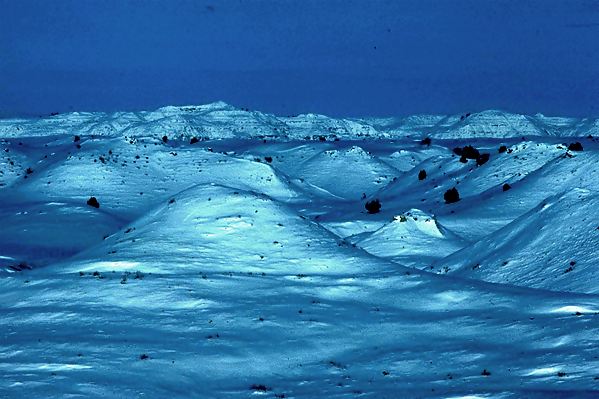
It was important for Lekší to experience the Beautiful Country. Looking out upon the landscape to distant summits gives one a sense of atmospheric perspective, that is to say, that from a distance sites and summits become like a dream and take on a blue color. That distance, that blue color reminds the Očhéti Šakówiŋ observer of a long abiding presence of Niyá Awičhableze, or the Enlightening Breath Upon Which All Life Returns. 


The Enlightening Breath is said to arrive on the Northern Plains in the spring, but all that lives and breathes draw upon it throughout the year. The Očhéti Šakówiŋ natural observation of atmospheric perspective is perceived thusly: Tȟéhaŋtaŋhaŋ táku tȟotȟó kiŋ tȟó atȟáŋiŋ, or “That which is green, from a distance becomes blue.” It is this sacred blue perspective that reminds the observer to treat the very land and air with the same respect as one treats home. 


Lekší Kevin’s favorite conversational topics were language, culture, land, and how these each serve as metaphor for renewal and must be cultivated each and every day. The Missouri River is central to life in the Beautiful Country. The Mnišóše, or Missouri River, begins at the confluence of three rivers. This great confluence is known to the Očhéti Šakówiŋ as Mnitȟáŋka, or “The Great Water.” This Great Water flows and becomes the Mnišóše, or “The Water Astir.” It grows and turns about the landscape south, until it concludes its long journey. There it once again becomes Mnitȟáŋka. The journey of the river and its flow south is reflected in the Spirit Road of the night sky. 


A favorite topic of traditional story was that of Wičháȟpi Hiŋȟpáye, or “Fallen Star.” In the last narrative of the cycle of Fallen Star stories, this traditional hero heard his father’s voice in the heavens call out for him to take his place in the sky. The people were camped at Pahá Makȟásaŋsaŋ, what is today White Butte, and gathered in a great circle to send off their beloved hero. With his Kȟolá, Fallen Star ascended the White Butte and embraced his brother, lay down on the summit, and there he died. But his story doesn’t end there. He transformed into light and rose into the sky. From there he sends rays of light and hope to his people below. 


It is now fall. A Western Meadowlark flew by me and cried out, “Tókša akhé.” At that moment, the sun seemed to shine a little brighter, the air was filled with the intoxicating smell of spring or heaven, a breeze swirled and a little whirlwind danced and dissipated into the sky. In one breath I smelled and tasted sage. It was a holy breath. An Enlightening Breath, one filled with the promise of renewal. The Western Meadowlark said so. 


We may not see you in the here and now, but you are as close as our next breath, as close as our dreams, as close as shadow in the prairie grass, as close as reflection in the water. 


Akhé waníyetu ú. Akhé kičhíč’iŋpi kte. Ohómni wótheȟike ečhéča takómni uŋmáčhetkiya yakpáptapi kta héčha. Mitȟákuye Owás’iŋ.


Again, the winter approaches. Again, they will carry each other. Although surrounded by adversity, nonetheless, may you safely emerge on the other side. All my relatives. 


Thursday, December 17, 2020

A 2021 Traditional Lakota Calendar

Wičháȟpi Hiŋȟpaye (Fallen Star or Star Boy), the traditional hero of the Očhéthi Šakówiŋ, takes his place in the heavens with his father Wičháȟpi Owáŋžila (North Star). 
Exploring the Traditional Calendar
Thirteen Moons In A Year

By Dakota Wind
The traditional calendar of the Očhéthi Šakówiŋ (the Seven Council Fires; Great Sioux Nation) consists of thirteen moons. A month begins with Wit'é (New Moon). The Winter Count Keepers kept track of the year with counting sticks. This was Haŋwí Yawápi, the Moon Counting Tradition. 

For many Očhéthi Šakówiŋ people the year begins in spring. Natural occurring events inform them when the New Year begins. When the ice breaks on the rivers and streams. When the geese return north. When the spring rain falls. When the bison bear their calves. When the trees bud. When Tȟašíyagmuŋka (the Western Meadowlark) sings. When certain stars appear too. 

In the winter count tradition, the year was referred to as Waníyetu (a Winter). The winter, or year as it were, was named after the year had passed. A year lasted from spring to spring. There were two spring moons, four summer moons, two autumn moons, and five winter moons. Since winter was the longest season on Northern Plains, it was natural to refer to the year as winter

In the moon counting tradition, the month was generally named for the natural events that occurred during that span of time. A month begins with the new moon. It is poetic to say that a month lasts twenty-eight days, but the winter count keeper with counting sticks knows the month is usually twenty-nine days or thirty days. 

The thirteen-month calendar overlaps the twelve-month astronomical by about twenty days. To reconcile the difference when the last month overlaps with the first month, the winter count keeper referenced the names of the last month and first month interchangeably. 

Last summer, a Lakȟóta educator contacted me about the possibility of creating a traditional calendar that was as faithful to the original calendar system as could be. I removed the names of the week because the traditional calendar did not have that, but I kept the seven-day week format. I removed western and American holidays and added several Wókiksuye (Memorial) Days. Blackened circles on each page demarcate where that month is in relation to the year (i.e. five black circles = fifth month, ten black circles = tenth month). Colors on the sides of the pictograph for each month correlate with the season (Blue = Spring; Red = Summer; Yellow = Autumn; White = Winter). 

This calendar includes the winter moons from the traditional year of 2020-2021. The new year for the Očhéthi Šakówiŋ begins on March 13, 2021, and runs through April 31, 2022. 

You can download this sixteen-month calendar RIGHT HERE. Its dimensions are 11" x 17". 

Here's a "white guy friendly" version too that is just 2021. Humanities North Dakota has beautifully redesigned each month and inserted my captions to explain the pictography for each traditional month. You can download that version if you want, RIGHT HERE. Humanities North Dakota will be printing a limited number of FREE calendars. Visit their website and sign yourself up for notifications and updates, or make a donation to them. 


Saturday, December 21, 2019

Winter Solstice Is Sacred Time

The Long Night Moon at White Earth Butte. The crescent represents the moon or month. Above the moon, appearing upside down at the top is the landscape profile of White Earth Butte as seen from the south looking north. 
Winter Solstice Is Sacred Time
A Time To Carry One Another

By Dakota Wind
The longest season of the year was winter on the Great Plains. On the traditional Očhéthi Šakówiŋ lunar calendar, the year consisted of two spring, four summer, two autumn, and five moons or months. The word for "year," in fact, is “Waníyetu,” meaning “Winter.”

The first snow was celebrated. Men put on their snowshoes and danced in the fresh powder. The snow made for ease of hunting. The Lakȟóta explained the changing of the seasons as an epic battle between two brothers: Wazíya (The North) and Okáǧa (The South). As one retreated, the other gained ground. When Wazíya won, his breath blew across the landscape, and for as deadly and sharp his cold breath might be, he brought a blanket of snow under which Uŋčí Makȟá (Grandmother Earth) slept.

The cultural genesis of the seasons aside, they remembered and shared real events from winters past. The High Dog Winter Count recalls the year 1800 as one of the most challenging years to survive. The summer heat was unbearably hot. The great gangs of bison went away, and hunting was poor. Flowers disappeared from the landscape, and the wind drank up the water. The birds refused to sing too.

A punishing winter followed, as remembered in the White Bull Winter Count.

Winter came, snow and ice were everywhere. A group of Lakȟóta decided to move winter camp from the bottomlands of one river to that of another. As they moved over the high plains, a blizzard caught them. Gradually some of them began to succumb to the cold and fell. As one person fell, another lifted and carried him or her for the rest of their journey. Kičhíč’iŋpi keúŋkiyapi, “They say that they carried each other.”

The Lakȟóta used the long winter night to share stories like that of Wičháȟpi Hiŋȟphaya (The Fallen Star; also called “Star Boy”). The story of his mother, Tȟapȟúŋ Šá Wíŋ (Red Cheek Woman), and father, Wičháȟpi Owáŋžila (The Star that Does Not Move; “The North Star”) is fairly well known and told in books and various online media.

The Lakȟóta share Ohúŋkakaŋ (stories from the distant past) and Wičhówoyake (stories, legends, myth) during the five lunar months of Waníyetu (the winter season), and during this moon especially, they share stories like the Fallen Star narrative. 


Sometime during the Long Night, the Fallen Star rises from the highest point of White Earth Butte. As the heavens turn, or as the earth rotates, the constellation gradually moves counter-clockwise until most of it gradually disappears past the northern horizon. Fallen Star, or Capella, dips down past the horizon, then majestically rises, bringing hope to the people. 

According to Ronald Goodman’s work in his Lakota Star Knowledge, Fallen Star was renowned among the Lakȟóta as “the Protector, the bringer of light and higher consciousness.” After becoming a father, Fallen Star ascended “a hill at night with a friend,” and told him that he was going to return home. Fallen Star laid down upon the hilltop and died. His spirit was seen as a light that rose into the star world. “At some time in the past, all Lakȟóta acquired the gift of light he brought them.” (Goodman, 2017; 32)

Goodman discusses an ancient central symbol strongly associated with the heavens and the world. This symbol is referred to as Kapémni (“the action is swinging around and around,” as with a warclub or bull roar), and resembles an hourglass. One half represents all that is heavenly, the other half represents all that is worldly. What is in the heavens is also present in the world. In the pages of Lakota Star Knowledge, this “mirroring” is demonstrated in a map of the Lakȟóta constellation Čhaŋgléška Wakȟáŋ (The Sacred Hoop) which demarcates the locations of landmarks in and around the Black Hills.

In 1967, Helen Blish published her thesis A Pictographic History of the Oglala Sioux, featuring the works of Amos Bad Heart Bull (~1868-1913), a noted Lakȟóta artist, amongst of what was a map of the Black Hills and other features including Pahá Ská (White Butte). White Butte is noted as being north of the Black Hills.

It is a general map; not everything matches up perfectly, in fact, maps of the landscape were concerned with lineal cohesion rather than over-exactness. Matȟó Thípila (Bear Lodge), or Devils Tower, is not actually within Khiíŋyaŋka Očháŋku (The Race Track), the edge of the Black Hills. The Race Track is the “mirror” of the Sacred Hoop, just as Makȟáska (White Earth Butte), or White Butte, is not a part of the Black Hills, it is north of the ‘Hills. It is a real butte. It is also the hill upon which Fallen Star made his journey back to the sky. 

Like Devils Tower, White Butte appears to be in the narrative of the Sacred Hoop in Bad Heart Bull’s map narrative, though it is not so in actuality. Yet according to the map of the Sacred Hoop constellation in Lakota Star Knowledge, a star commonly known as Capella, the brightest star in the constellation Auriga appears as part of the Sacred Hoop.

Referencing Bad Heart Bull’s map and tracking the sky from the Sacred Hoop to the North Star one “sees” the stars associated with the constellation Auriga “pointing” or “reaching” towards the North Star. The constellation Auriga appears to be Kapémni, or "mirror" of White Butte and the immediate landscape surrounding that beautiful plateau. 

Fallen Star returns to the sky to be with his father. He sends rays of light and hope to the Očhéthi Šakówiŋ people. 

As Capella is the Fallen Star I’d like to suggest that Auriga is his constellation. At about 6:00 PM on the longest night of the year, this constellation appears upside down. Twelve hours later, at about 6:00 AM, which is at the tail end of the longest night, the heavens have rotated 180° counterclockwise, and have become right side up. The Fallen Star “rises” from the horizon, it rises from the top of White Earth Butte.

Long ago, before the reservation era anyway, the month which some might call December today, was known by some Lakȟóta as Waníčhokaŋ Wí (The Midwinter Moon). They might not have known the exact time (it’s 10:19 PM CST) but could reckon the subtle shift in daylight when there was a little more of it and could track the general date with counting sticks; they knew it happened in the Midwinter Moon.

According to Vi Waln, “I believe the real day of prayer was observed on the winter solstice by the people with ceremony, food, and family.” Further, “Nature and the stars were monitored carefully to help with preparation for whatever time of year was upon the people.” And lastly, “Many Lakota people will offer prayer in much the same our ancestors did so on the Winter Solstice.” (Valn, Winter Solstice Is Sacred, 2011)

There are five winter moons in the traditional Lakȟóta calendar. After the Winter Solstice, it was time to gather red willow (eastern dogwood) to make čhaŋšáŋšaŋ, traditional tobacco made from the inner bark of the red willow, and used for ceremony.

In the heart of winter, in daylight, there sometimes appears the sundog. The Lakȟóta call it Wíačhéič'thi, which means "The Sun Makes A Campfire [For Himself]," and the story associated with this event holds the promise of light, that it returns. Sometimes, during the winter nights, they see a ring around the moon, also called Wíačhéič'thi, only this is interpreted as "The Moon Makes a Campfire [For Herself]." The Moon has vigorously stirred her pot and light has spilled about her lodge.

The New Lakota Dictionary lists the Winter Solstice as Waní-Wí-Ipȟá (Crest of the Winter Sun). The Húŋkpapȟa might call the same Haŋyétu Háŋska (The Long Night) as they called this traditional month Haŋyétu Háŋska Wí (The Long Night Moon).

However it is called this day, or this month, these things are certain: gather close together with family in observation or prayer, eat together, share stories, and carry each other.


Thursday, November 21, 2019

Dakota Moon Counting Tradition, A Poster

Above, a screen capture of the Dakhóta moons throughout the year.
Haŋwíyawapi Wičhóh'aŋ Kiŋ
Dakh
óta Moon Counting Tradition
Bismarck, N.D. (The First Scout) (Updated) - The Isáŋyathi, Dakhóta-speaking people east of the Red River of the north, east of the Big Sioux River, follow a twelve-month calendar. 

Their calendar system is much like that the moon counting tradition of the Thítȟuŋwaŋ, the Lakȟóta-speaking people west of the Missouri River. There are sometimes more than one name for the month, but each month reflected a deep relationship with that the people have with the environment. This informs us, that there was a long occupation and a record of observation for the people to survive and adapt to the landscape. 

Feedback from Spirit Lake informs us that the Dakhóta did, in fact, employ a thirteen-month traditional calendar. The twelve-month calendar indicates assimilation. Philámayaye Lekší. 

The historic Očhéthi Šakówiŋ held a world-view perspective that was south-oriented. Taking this into account, then the rotation of the moon and the rotation of the earth around the sun would give us a moon calendar layout that looks like the poster above with the cycle of the moons and the phases of the moons "read" in a counter-clockwise manner.

Of course, the 
Očhéthi Šakówiŋa would never have laid out images like this, rather, they kept track of the moons with counting sticks.

Get your copy of this 36"x48" poster of the Dakhóta Moon Counting Tradition for FREE. Share this with others and your classroom today. 


Friday, August 30, 2019

Moon Counting Tradition, A Poster

Pictured above is a screen capture of a poster with information about the Moon Counting Tradition. 
Haŋwíyawapi Wičhóȟ'aŋ Kiŋ
The Moon Counting Tradition
Dakota Wind, Editor
Bismarck, N.D. (The First Scout) - Winter Count Keepers kept track of time by following natural changes in the environment and naming the moon in which that moon became associated. 

Months were moons, and thirteen moons represented a winter. The Očhéthi Šakówiŋ (the Seven Council Fires; the "Great Sioux Nation") called a cycle of thirteen moons a winter because winter was the longest season on the Northern Plains. 

A moon could have many names. The Wolf Moon one year may be called the Moon of Popping Trees the next. The Yellow Leaf Moon among the Lakȟóta might also be called the Brown Leaf Moon; this same moon among the Dakhóta would be called the Moon When Rise is Laid Up to Dry. 

The historic Lakȟóta held a world-view perspective that was south-oriented. Taking this into account, then the rotation of the moon and the rotation of the earth around the sun would give us a moon calendar layout that looks like the poster above with the cycle of the moons and the phases of the moons "read" in a counter-clockwise manner. 

Of course, the traditional Lakȟóta would never have laid out images like this, rather, the winter count keeper kept track of the moons with counting sticks. 

This poster measures at 3' x 4' and is available for FREE, click here. Share this poster with others and your classroom today. 

Monday, February 4, 2019

A 2019 Lakota Calendar

For a great explanation of the traditional moon calendar get yourself a copy of "Moonstick: The Seasons of the Sioux," which was reviewed and checked by Mr. Raymond Winters (Fighting Bear), an enrolled member of the Standing Rock Sioux Tribe.
Haŋwí Wówapi 2019
A 2019 Lakota Calendar

By Dakota Wind
Bismarck, ND - For the Lakȟóta, the New Year begins in spring, and lasts until the next spring. A year is called Waníyetu or winter because winter is the longest season on the Northern Plains. The new month begins with the new moon. A month is called Wí. The sun is also called Wí. To differentiate between the luminaries, the moon is sometimes referred to as Haŋwí (Night-Luminary), and the sun as Aŋpétuwi (Day-Luminary).

The eight phases of the moon are:

Wit’é (Moon-Died) The New Moon.

Wílečhala (Moon To-Be-Recent). The Waxing Crescent between the New Moon and the First Quarter.

Wíokhiseya (Moon Half-Of). The First Quarter of the moon.

Wímimá Kȟaŋyela (Moon-To-Be-Round Near-By). The Waxing Gibbous between the First Quarter and the Full Moon.

Wímimá (Moon-To-Be-Round). The Full Moon.

Wí Makȟáŋtaŋhaŋ Ú (Moon From-The-Earth To-Be-Coming Here). The Waning Gibbous between the Full Moon and the Third Quarter.

Wiyášpapi (Moon-To-Bite-A-Piece-Off-Of). The Third Quarter of the moon.

Wit’íŋkta Kȟaŋyéla (Moon-Wears-About-The-Shoulders Near-By). The Waning Crescent between the Third Quarter and the New Moon.

The Thítȟuŋwaŋ (the Teton, or Lakota) regard the moon in a feminine sense. There is no “man on the moon,” but an old woman in the moon whom they call Hokhéwiŋ. When a ring around the moon appears it is called Wíačhéič’ithi (The Sun Makes A Campfire For Itself); when a ring appears around the moon they say that Hokhéwiŋ has vigorously stirred her pot and the light has spilled out and around her lodge.

Wíačhéič’ithi is also a reference to sundogs. Long ago, a man went out to pray when the cold gray winter seemed to linger too long. The constant bleak gray days began to effect the people’s dreams. He came back and instructed the camp to select two groups of youth to go out east of camp and build to fires, then to return. Everyone came together in the center of camp and prayed. The sun broke through the clouds and as it rose into the sky, the two fires rose into the sky with it. For the Húŋkpapȟa, the sundog is a promise of hope and light.

The Thítȟuŋwaŋ have two differing explanations for the cycles of the moon. The Húŋkpapȟa say that a large Itȟúŋkala (mouse) with a pointed nose gradually eats away the lodge of Haŋwí until there is nothing left (the waning of the moon). Haŋwí then has to reconstruct her lodge (the waxing of the moon). The Oglála say that Haŋwí draws her shawl over either side of her face as Wí approaches her or withdraws from her.

Like other cultures, the Očhéthi Šakówiŋ recognize four seasons. These are: Wétu (Spring) which is two months; Blokétu (Summer) which is four months; Ptaŋyétu (Fall) which is two months; Waníyetu (Winter) which is five months. The changes of seasons are caused by the eternal conflict of two brothers: Wazíya (the North) and Ókaǧa (the South). If Wazíya plays his flute during summer rains, he causes it to freeze, making hail. When Wazíya wins, we have winter; when Ókaǧa wins, we have summer.

The Očhéthi Šakówiŋ used to keep track of the days, months, and year with Čhaŋwíyawa (Counting Stick/s). Some might use thirteen sticks, one for each month in the lunar year; others might just use one willow switch and notch it (one for a day, or one for each month). Čhaŋwíyawa are recognized more for their use in hand games (a traditional guessing game) than for tracking time.

This calendar includes memorial days of some massacres and major conflicts. This 2019 moon calendar overlaps with part of December 2018 through part of January 2020. 

This year's calendar is made with the gracious assistance of Mr. Dustin White and Mr. Doug Wurtz. Both have allowed me to use their photographs to complete this year's calendar. Their names appear next to their photographs. 


Wednesday, June 14, 2017

Painting An Umbrella

The Black Warbonnet pattern is rendered in contemporary colors on an umbrella.
Painting An Umbrella
A Provision For Shade Or Privacy
By Dakota Wind
Bismarck, ND (TFS): In the late 1800s, and early 1900s, the umbrella or parasol was a valued item. Lakota-Dakota men and women obtained one to provide shade in the semi-arid environment of Makȟóčhe Wašté (The Beautiful Country; The Great Plains). Men and women took their shade with them to the wačhípi (pow-wow; dances), when they went visiting friends and relatives. Young single men and women used them to provide shade and privacy when they wanted to exchange a private word in the public village setting. 

This is about the half-way point. It was quite challenging to stay motivated.

The Lakȟóta call the umbrella, or parasol “Aóhaŋziya” (to cause shadow to fall upon somebody). The New Lakota Dictionary lists umbrella as “Íyohaŋzi.” The Williamson Dakota Dictionary entry for umbrella is “O’haŋzihdepi.” The Buechel Lakota Dictionary entry for the canvas of a covered wagon as “Oiyohaŋzi.” 

Each additional track of the pattern took twice as long as the previous. I used a string as a compass to keep the pattern balanced and uniform as best I could.

Before the umbrella was a trade item, the Lakȟóta carried a tree limb with green leaves still attached, to provide shade for themselves on the hottest and brightest of days. 

The pattern along the edge of the umbrella is one that would typically be seen on tipi liners.

The 2nd Edition of the New Lakota Dictionary lists a solar eclipse as “Aóhaŋziya,” and perhaps that is what some Lakȟóta speakers call it. The Húŋkpapȟa, however, called the solar eclipse “Maȟpíya Yapȟéta,” which means “Cloud On Fire.”

I am thinking of painting at least a few more umbrellas. Maybe a little smaller in size. This umbrella measured 60" across. I'll add a few finishing touches like nickle bells at the ends of each rib, and a few ribbon streamers from the spike. My youngest sister has offered to bead the spike in matching colors. The painting took about ninety hours to complete.

Dakota Wind is an enrolled member of the Standing Rock Sioux Tribe. He is currently a university student working on a degree in History with a focus on American Indian and Western History. He maintains the history website The First Scout.


Wednesday, August 6, 2014

The Painting Tradition: Black War Bonnet Pattern

Painting the Black War Bonnet Society motif. The pattern is penciled in, then painted. 
Wičhóȟ’aŋ Itówapi
The Painting Tradition

By Dakota Wind
BISMARCK, N.D. – The Black Warbonnet Society of the Thíthuŋwaŋ Lakȟóta people was an elite warrior society in the late nineteenth century. Members and especially the leader of this group would paint a special symmetrical and geometrical pattern that represented birth, the road of life, and death, within two concentric patterns of “feathers.” Owners, and sometimes wearers, of these extravagantly painted robes, believed that the pattern – even the execution of the pattern – was good medicine and protected the owner.

The major color scheme of the Black War Bonnet Society pattern is almost overwhelmingly black for a reason. Black represents west, the thunder beings, bravery, and death. Placing black patterned with white represented feathers in this headdress, but also a balance of life and death.

Members of this warrior society would also paint their pattern upon bison skulls and shields. Variations of the Black War Bonnet pattern could be found on the robes of other tribal nations too. 


The bison robe measures about 38 feet square. It is a winter bull hide; the fur side is full of soft thick fur. 

In the pre-reservation era, the pattern was associated with Woóhitika, the traditional Lakȟóta value of bravery. After the post-reservation era began, and into contemporary times, the pattern became associated with Wóitȟaŋčhaŋ, the values of leadership and service, though these values often went hand-in-glove with bravery.

The most popular execution of the Black War Bonnet design today on bison hides was featured in Thomas E. Mails’ “Mystic Warriors Of The Plains,” which in itself is based on an actual painted robe. It is often recreated in almost clinical detail on shields, bison skulls, and bison robes with little to no variation. 

This sundog appeared above the Missouri River on the Standing Rock Sioux Indian Reservation in Fort Yates, N.D.

Early last year, my lekší Cedric, shared the wonderful story of the sundog, which the Lakȟóta call Wíačhéič’ithi, or “The Sun Makes A Campfire For Itself.” The Lakȟóta word, Wíačhéič’ithi, also refers to the ring that sometimes appears around the moon, which signifies a change in weather. 


"...a new interpretation of the Black War Bonnet design, one of hope and light..."

The story of the how the sundog came to be and the stories of the sun, who wore a fiery headdress, bring to mind a new interpretation of the Black War Bonnet design, one of hope and light, and I decided to paint one.

The Black War Bonnet Society design is nearly finished. 

The pattern calls for a "road" running between three medicine wheels. The medicine wheel represents the four cardinal directions, the four winds, four stages in life, and the four great Lakȟóta values: Wóohitike (Bravery), Wówačhaŋtognaka (Generosity), Waúŋšila (Compassion), and Wóksape (Wisdom). There are, of course, more than four virtues, and this is just an example. 

The three medicine wheels in this case represent birth, life, and death. The Black War Bonnet Society motif is arranged around the center wheel. The popular execution of the pattern involves using yellow. I've substituted red in place of yellow in this case. 

White has been added to the pattern. White is said to represent anything from purity of spirit to life, or the north direction. 

The two concentric tracks of feathers represent the headdress. In this re-examination of the pattern, the center medicine wheel represents the sun, the two flanking medicine wheels represent the campfires.

The painted hide is finished after a red border accents the edge. 

The entire pattern is flanked by eight "fans." A red border represents the life and wisdom. The entire project was carried out and finished over the summer of 2014. Each time I set up and painted in the back yard, I was blessed to hear songs from Tȟašíyagmuŋka (the Western Meadowlark) and Wakíŋyela (the Mourning Dove), and one morning in particular, a Tȟašíyagmuŋka landed next to my paint and sang, as if to ask, "Tȟaŋháŋši, taku huwo [Cousin, what are you doing?]?"

My experience of painting this bison robe is varied, from sitting at an improvised table in the golden light of an early summer morning, watching my paint dry on a hot mid-summer afternoon, to enjoying a cool cloudless windy evening under a dark azure sky. Through it all, birds shared their songs, and no matter the day or time, I was never once pestered by mosquitoes. I would do it again. 

Support an enrolled member of a federal tribe, support an artist. View it in person for yourself. It is on display at the Five Nations Arts in Mandan, N.D. 

Tuesday, January 1, 2013

Wi'ace'iciti: The Sun Makes For Itself A Campfire

There are two constants on the Great Plains: the wind and long winters. Theodore Roosevelt National Park (wikimedia commons) above. 

The Sun Makes A Campfire
Keeping The Tradition Alive Through Story

By Dakota Wind
STANDING ROCK, N.D. & S.D. - On the Northern Great Plains there are two constants which shaped the natural landscape throughout the ages: the endless wind and the long cold winter.

The wind is always here. From the summer breezes which carry only the oppressive heat of summer to the cutting sting of winter, the wind has shaped the land as much as it has touched the souls of the native sons and daughters and left its mark on their character and spirit.

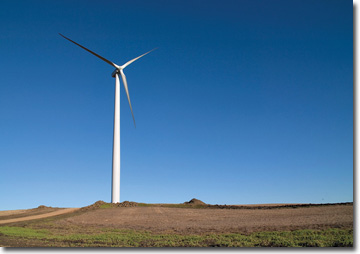
The Lakota call the wind tȟatė. In the days of warriors, they had another term for the spirit of the wind, Táku Wakȟáŋškaŋškaŋ. I’ve heard the term as used to mean “Something Holy Moving.” I like Albert White Hat’s translation of the word Wakan, in his efforts to cleanse and revitalize the Lakota language, in which he interprets it as “with-energy.” Something with great energy moving across the land perfectly describes the respect for the mystery of creation the Lakota held for when the clouds raced across the sky, the wind blowing across a vast ocean of native grasses, the very power of the wind. Today, scattered across the prairies are wind farms, taking the momentum – the energy – of the wind and convert it into electricity.


In the days of warriors, the Lakota believed that there lived a great giant in the far north, Wazíya, who blew his cold breath out across the land and visited frost on the grasses, leaves, and trees in the fall and spring, but as the rivers and streams froze, true winter tested the people with cruel stinging cold and pure white snow. Winter was a test of character.

The winter became a part of the culture for the indigenous. Many tribes marked the passing of seasons by the passing of winter. The new year began when the geese returned, when the trees began to bud, when the river ice broke, and when bison calves were born. In this observance of nature did the Lakota elders, holy people, and leaders gather together and name the previous year, or winter.

On the longest night of the year, the Lakota would reflect and pray in the way of the ancestors. Some still do this with a midwinter Iníkaǧapi, a cleansing ceremony.


There is another natural phenomenon, the sundog, which is revealed to the world each winter. For the ancient and medieval Christian it was regarded as an omen, of God’s impending judgment. Maybe a long ago priest interpreted the sundog as evidence of the Living Presence of the Holy Trinity appearing in the sky. For the Lakota, the sundog held the promise of the sun.

I saw a sundog recently. I had seen them as a child and had never once felt them as a sign of ominous peril. I remember being entranced by the halo of light, the arc from one sundog to its twin on the other side of the sun. Without possessing the language for what I felt then as I do now, I can truly tell you that even then I felt an overwhelming respect for the mystery of creation. Seeing a sundog recently rekindled the curiosity of youth that I asked my lekší, my uncle, about the sundog.

One said to me, the sundog was simply a natural sign which meant that the Lakota could expect cold weather. Another gave me the honest reply that he had not heard of a story associated with the sundog event.

The Lakota call the sundog Wíačhéič'ithi, which means The Sun Makes A Campfire [For Himself. The Plains Indian sign language, a mutually intelligible gesture language in use for communicating among the many tribes, articulates the sundog with the sign for sun (thumb and index finger making nearly a closed circle, tracing the sun’s arc in the sky) and the sign for fire (one hand, back down above the palm of the other, fingers of the top hand wiggling to and fro mimicking dancing flames).


The design above is most often regarded as an example of what is called the Black Warbonnet Society pattern. The very center pattern and the inner track of abstract feathers is certainly the Black Warbonnet pattern. The daystar, or sun, Aŋpó, was said to have worn a brilliant flaming headdress. It would seem that this particular execution of the Black Warbonnet pattern should be reexamined. The execution of the pattern with three medicine wheel centers, and arc of the second track of abstract feathers bears a striking semblance to the sundog phenomenon.

My lekší Cedric listened patiently to my petition for traditional knowledge regarding the sundog phenomenon. This is what he shared with me:

Being short with it, there is a story that my Uncle Ed told us when we were little guys. It occurred probably at a time when there was a severe cold time and there were lots of clouds, or the sky was grey. Many days had passed when the people went and had council with the elders of the camp.

It was directed after prayers and careful deliberation, that two fires were to be made in the east gate or opening of the camp circle. One of the elders then prayed to the east and asked for a break in the weather. As prayers were had, the sky began to light up and the clouds dissipated, winds calmed, and the sun rose.

As the elder prayed, the sun (wi) was on the horizon with the two fires on each side. Many witnessed this. Praying in the time of purification of the earth is sacred, especially in the morning, when the air is calm and your voice can be heard to the horizon.

The animals will let you know also when it is time to do these things.

This is what I remember of the story.


I share this short story with you. It’s not something that is in a book. Paul Goble hasn’t made a children’s book out of this story. It is living culture. It is tradition. There is more to learn and I’m a lifelong student.