Showing posts with label Northern Plains. Show all posts

Thursday, December 26, 2019

Lakota America, A Book Review

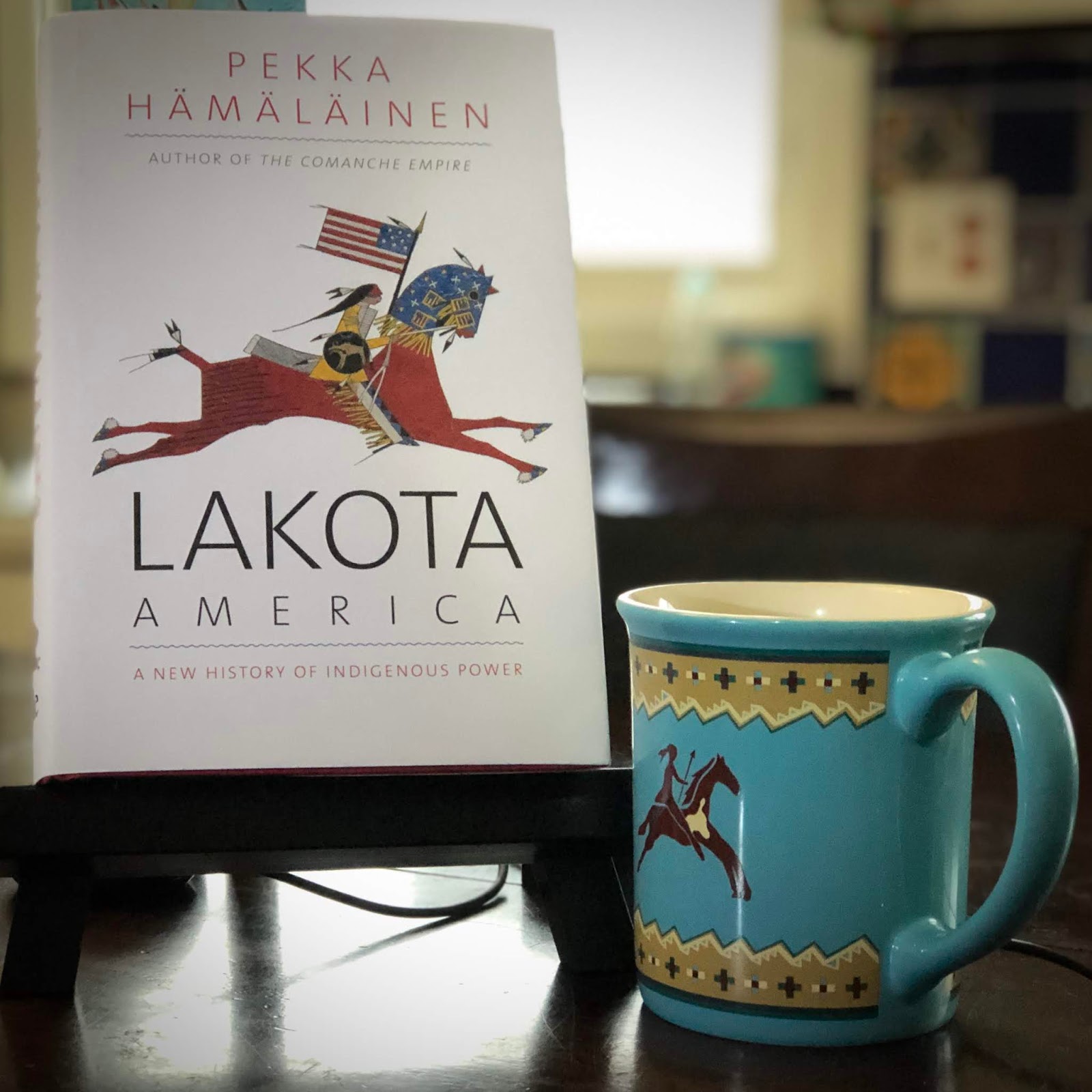
The cover of Lakota America features the art of Lakȟóta artist Jim Yellowhawk (Cheyenne River Sioux Tribe; Itázipčho). A simple photo of my copy of this book. 
Lakota America, A Book Review
This Book Fuckin' Moved Me
By Dakota Wind
Hämäläinen, Pekka. Lakota America: A New History of Indigenous Power. New Haven, CT: Yale University Press. 2019. $35.00 (hardcover). 544 pages + ix. Acknowledgments, a note on terminology, introduction, epilogue, a list of abbreviations, notes, glossary, index, maps, photos, illustrations.

“Yet this book is decidedly a history of the Lakotas, written from sources that seek to convey their perspective, often in their own words. An extraordinary archive makes this possible to an unusual degree. Lakota communities traced the passage of time by drawing on a buffalo hide a pictograph of one memorable event for each year. Lakotas call these calendars waníyetu iyáwapi. They draw attention to the mundane and reveal the sublime. Perhaps most important, as a body of historical record, winter counts capture what fascinated Lakotas and what mattered to them most. Lakota America makes the fullest use yet of this Indigenous archive in writing Lakota history.” (Hämäläinen, 2019; 8)

Thus begins Hämäläinen’s Lakota America, a post-colonial contact history of a people referencing their own historical records, and in this process, treating these pictographic records with a serious care and careful regard that these primary resource documents deserve. Most histories regarding the Očhéthi Šakówiŋ, Seven Council Fires (or “The Great Sioux Nation), are constructed primarily from colonial records (i.e. explorer journals, trader records, and missionary accounts). Hämäläinen embraces the indigenous record as a concurrent history, complemented by the colonial record.

I felt a deep sense of gratification reading this beautiful work.

Hämäläinen paints a picture of a people occupying a known and busy landscape inhabited and shaped by other indigenous peoples from trade, war, disease, and expanding colonial empires, to displacement, removal, imprisonment, and survival in a post-reservation world.

The story begins not with conflict, but with the arrival of Thiyóškate (Plays In The Lodge) on a diplomatic mission to Montreal to secure peace in the interior of North America. Conflict spread west threatening to invade Očhéthi Šakówiŋ homelands for beaver pelts in a trading system that left indigenous peoples dependent on iron wrought trade items.

There are many books about the Očhéthi Šakówiŋ, among them other notables including Royal Hassrick’s “The Sioux: Life and Customs of a Warrior Society,” Thomas Mails’ “Mystic Warriors of the Plains.” Nearly all western history books agree that the horse arrived in the mid-1700s. Hämäläinen breaks from academic consensus by informing readers that the horse arrived on the northern plains following the Pueblo Revolt of 1682. (Hämäläinen, 2019; 55)

The chapter, The Lakota Meridian, explores the Očhéthi Šakówiŋ in the context of world history. Hämäläinen reconstructs the setting of the interior of North America following the arrival of the horse, the gun, and smallpox epidemics which obliterated or weakened so many other first nations. The Lakȟóta secured and manipulated trade to their benefit. The Arikara War of 1823, the first American military campaign against Plains Indians sees the Očhéthi Šakówiŋ side with the United States, years after refusing “to be discovered” and acknowledging the United States as sovereign. (Hämäläinen, 2019; 140)

Lakota America is not a conflict history of the American West. It is closer to a biography in tone, but not on any one individual or few of Očhéthi Šakówiŋ leadership. It is not so much a cultural examination either; there are other resources for that. This work is like a study of the character of a people throughout several generations. Hämäläinen briefly articulates the cultural story of the White Buffalo Calf Woman and the Gift of the Sacred Pipe but reimagines this ancient narrative as a story of new urgency as the Lakȟóta ventured west from the Mnišóše, the Water-Astir (or Missouri River). (Hämäläinen, 2019; 164-165). He does reiterate throughout his work that Očhéthi Šakówiŋ identity is evidenced by virtue of practice and language. 

The image above was drawn by Sitting Bull's own hand. In his later years, Sitting Bull and his own people, the Húŋkpapȟa, identified him as a medicine man or spiritual leader. 

Očhéthi Šakówiŋ homeland is determined by occupation of waterways, in particular, the Mnišóše and all his tributaries. Boundaries are determined by the waters, and those boundaries were recognized in both the Fort Laramie Treaties. Hämäläinen carefully determines and explains how those boundaries were set through conflict and diplomacy. Their villages moved from valley to valley across the plains. The traditional Očhéthi Šakówiŋ recalls that the people moved from stream source to stream source across the plains.

Hämäläinen explores Lakȟóta political philosophy in their own terms as well as they dealt with the decline of the great bison ganges and the arrival of more fixed signs of American occupation. Iwáštegla, meaning “moderate,” “gentle,” and “easy,” but for also for the greatest maximum benefit, that which is “wašté,” or “good,” for the people. “Lakotas still expected wašíčus [sic] to compromise more than they did: after all, most of their interactions took place in Lakota territory. In this charged moment one can glimpse something essential about Lakotas’ ability to accept new realities, adjust to changing governing conditions, and yet remain indigenous.” (Hämäläinen, 2019; 300)

Lakota America has many strengths. Meticulous research is one, but what makes Hämäläinen’s work stand out is that he acknowledges, employs, and attributes the history (oral and pictographic) of the people he writes about, putting it on the same page as colonial records equating its importance.

Lakota America touches on the greatest conflict to shape the American West, Pȟežíšla Wakpá Okíčhize, or the Battle of the Little Bighorn. Every year there’s a book written about Lt. Col. Custer and the fate of the 7th Cavalry. Every book published about the Očhéthi Šakówiŋ includes this fight. It is refreshing that Hämäläinen does not dedicate an entire chapter retreading the last great Indian fight.

Hämäläinen does not stop his narrative of Lakȟóta history with Čhaŋkpé Ópi Owíčhakte, the Wounded Knee Massacre. No, he brings the story of adaptation, survival, and self-determination up to recent events at Íŋyaŋ Iyá Wakpá, the Talking Stone River (or the Cannonball River). A people and their history did not end at the turn of 1900. It lives and is a constant story of change. Hämäläinen gets it.

Lakota America is an engaging read. I found myself stopping several times throughout, lost in thought, and provoked to remember that indigenous occupation includes several other first nations who contested the landscape and gratified to discover how much Hämäläinen relied on Lakȟóta history to create this immensely reflective work.

My only concern, and it is a very minor thing, is that not all Dakhóta-Lakȟóta use the same term for the “winter count:” Northern Lakȟóta (i.e. Húŋkpapȟa) and Iháŋkthuŋwaŋna (i.e. Wičhíyena, or “Upper Yanktonai”) refer to the pictographic records as Waníyetu Wówapi, which means, “Keeping an Account of the Winter.” The Dakhóta and Lakȟóta who were placed at Fort Peck refer to winter counts as Hékta Yawápi, or “Counting Back.”

Lakota America has earned its place on my bookshelf. Get your copy as soon as you can to add it to yours. 


Wednesday, December 19, 2018

The Long Soldier Winter Count

Waníyetu Wówapi Kíŋ Akíčhita Háŋska
Long Soldier Winter Count Revisited
By Dakota Wind
In 2007, editors Candace Green and Russell Thornton brought together in one publication "The Year the Stars Fell: Lakota Winter Counts at the Museum." This book features not just the winter counts, but interpretations of the pictographs, including commentary about the further meanings of various entries. It is obvious that the editors care deeply for these pictographic records. 

The Long Soldier Winter Count deserves to be revisited and compared to other Hunkpapa Lakota winter counts. Long Soldier's winter count seems to match up closely with the High Dog Winter Count, but there are some distinctions. This second look is also an attempt to put the narrative of each entry back into the Lakota language. 

There exists a variant of the Long Soldier Winter Count that has been studied and interpreted by Dr. Jenny Tone-Pah-Hote in the summer of 2004. Her interpretation of the MIA Long Soldier Winter Count may still be on the internet somewhere. 

I've employed the Lakota Language Consortium's (LLC's) Standard Lakota Orthography (SLO). Entries follow the format of year, the year's "name" written using the SLO, a free translation, followed by narrative or additional commentary. 

Get yourself a copy of "The Year the Stars Fell."

View a full-size copy of the Long Soldier Winter Count at the Sitting Bull College Library

Download the Long Soldier Winter Count Revisited.

Questions? Comments? Email me at tunweyathokaheya (at) gmail (dot) com.


Wednesday, December 6, 2017

History Of North Dakota, A Book Review

History of North Dakota, A Book Review
Environment Determines Character
By Dakota Wind

Robinson, Elwyn Burns. History of North Dakota. Lincoln, NB: University of Nebraska Press, 1966. Out of print. (Fargo, ND; ND Institute for Regional Studies, 1995. $40.00.) 610 pages + viii. Preface, table of contents, maps, illustrations.

Robinson’s History of North Dakota is a dense read. Twenty-three chapters take readers on a journey of remoteness from the formation of the prairie, a modest “Indian” occupation, through exploration, settlement, booms, WWI & WWII, to the culture and character of North Dakotans.

Robinson’s History’ features indigenous history, but the human occupation history only begins with Pierre La Vérendry’s 1838 fall encounter with the Mandan on the Missouri River. Robinson disguises ecological history as pre-contact history, describing the conditions in which the Indians lived and hunted.

The Opening of the West unapologetically includes frontier military history. Lt. Col. Armstrong gets a two-page mention here regarding his role in the Black Hills Expedition of 1874, and his last failed command which concluded at the Little Bighorn Fight of 1876. The military was placed in an odd position, to the natives, the forts represented a permanent advancing presence, and to the pioneer, the military represented the furthest most edge of western civilization. Robinson describes the military as practically impotent, a token might that couldn’t hold back its own citizens from entering and occupying the Black Hills, but a might that was exercised only after American citizens died in escalating conflict with the natives.

The environment, the dry, semi-arid plains, industrial technology, and a desperate need to help and be helped or utterly fail developed the cooperative character of the North Dakota farmer. If environment determined the pioneer spirit, it would seem that one could make the argument that the vast open plains did the very same to the indigenous for millennia. One simply couldn’t survive or progress without the help of another soul. For farmers, this real need to cooperate extended beyond the social confines of church and field, and developed into cooperations.

The completion of settlement teeters on a few things, not just immigration. War in the Philippines and Cuba, industrial and technological advances in agriculture, contributed to the development and settlement of the plains.

The Character of a People offers an answer to the spirit of North Dakota citizens: common experience and conditions of existence (the environment). It’s the environment that Robinson determines is the factor in character development and cites the work of psychologist and part-time ethnohistorian Dr. James H. Howard, that even the natives were affected by the environment because plains Indians differ in personality and disposition than their woodland kin.

Robinson touches on the “country mouse” mentality of North Dakota citizens, and feelings of inferiority and non-adjustment of rural citizens among city-folk, even among the city or townfolk in the state. Politicians reacted to their rural constituents by dressing down. The two characteristics that both the indigenous and colonist must posses are courage and faith in the future.

Robinson wrote his History’ for the citizens of North Dakota, perhaps to instill a sense of pride that the people of the state could live and thrive to a time then a history of book could reward their patience and faith. Though Robinson recognizes the struggle settlement, and acknowledges the displacement and confinement of the indigenous, his work is too optimistic. Fifty-seven years after the first printing of History and North Dakota is still dealing with the consequences of native dispossession and treaty issues decades before the territory entered the union as a state. Perhaps Robinson would attribute his optimism to the North Dakota experience.

Robinson’s book is dense, and it’s certainly not a recreational read. It’s dated material, but that’s probably why one should read it, for its insight to North Dakota as someone who’s experienced North Dakota; a retrospect from the middle of the twentieth century.


Dakota Wind is an enrolled member of the Standing Rock Sioux Tribe. He is currently a university student working on a degree in History with a focus on American Indian and Western History. He maintains the history website The First Scout.


Monday, November 18, 2013

The Wind Is The Spirit Of The Great Plains

Tȟaté’káoškokpa (Canyon Made-By-Wind), or Wind Canyon, along the Heȟáka Tȟa Wakpá (River Of Elk; Little Missouri River) in Makȟóšíća (Badlands, N.D.; Theodore Roosevelt National Park).
The Wind Is The Spirit Of The Great Plains
The Sky In Word, Pictograph, And Sign
By Dakota Wind
THE GREAT PLAINS - The wind has been a constant presence on the open prairie since creation, and has shaped the landscape with its caress. It races across the open sky with the summer and winter storms, and flows about the landscape playfully, fitfully, and angrily. It is the very essence of the Great Plains.

The Lakȟóta have several words for the wind and its attributes such as tȟaté (air in motion), uyá (to blow leeward of the wind), kaȟwókA (to be carried along with the wind), ikápȟaŋyaŋ (to be beaten down by the wind, as with grass) or itáglaȟweya (with the wind). OkáluzA, or ičáluzA, refers to a breeze.


When a strong wind is present, or suddenly appears, during prayer or at a gathering, the wind might even be referred to as takú wakȟáŋ škaŋškáŋ (something with great energy is moving). A whirlwind is called tȟatéiyumni, which some regard as a sign that a spirit is present.

There is only one word to describe a windless day, ablákela (calm or quiet).

When the wind blows cold, such as it does in the winter months, the Lakȟóta refer to it as tȟatóšni. The cold winter wind had a story of its own, and in the days of legend, before steamboats and trains, before soldiers and missionaries, when the camps moved across the prairie steppe in the fall to establish winter camps, they told the story of Wazíya, that which some call a giant, or the Power Of The North. Wazíya blew his cold breath across the world. 


The blizzard is known to the Lakȟóta as Iwóblu. 

But even the wind has an origin. There are various stories about the wind, but the basics are that after creation, Tȟaté (Wind) took the daughter of Old Man and Old Woman, Ité (Face) as his wife. They had four sons, the Four Winds. Iŋktómi, the Lakȟóta trickster, persuaded Ité to begin an affair with Wí (the Sun) to gain status. 


The affair backfired, and Takú Wakȟáŋ Škaŋškáŋ gave Haŋwí (the Moon) her own domain, and sent Old Man and Old Woman to earth along with Ité. Ité was ever after parted from her husband, Tȟaté, and their four sons. Ité, however, had a fifth son, Tȟatéiyumni (Whirlwind). Woȟpá (Falling Star Woman), daughter of Wí and Haŋwí, was sent to earth. Woȟpá became the wife of Okáǧa (the South Wind) and they raised Tȟatéiyumni as their son.

They say as the summer wanes and turns to autumn, the wind changes with the weather. That change in the wind is the breath of North. The cold was and is deadly, never to be feared, but respected. The North spreads his robe across the sleeping land. The North makes hunting game easier to track. In fact, the Lakȟóta used to dance in snowshoes in the blanket of the first snowfall. They rejoiced in the weather and embraced the deep cold. 


In the spring or autumn mornings, in the early morning just as the sun rises, there appears a mist. The Lakȟóta call this Aŋptȟáŋiya. Regular fog is P'ó. 

Sometimes the winter seems like it will never end, even for people who’ve lived here for thousands of years. Gray skies smother the light for days on end. Everywhere the land is monochrome. Months without color took its toll on the people. These days it’s called Seasonal Affective Disorder (SAD).

For the Lakȟóta people, even the winter holds the promise of light and hope.

On cold days one might see what they call a sundog, but its not every cold day that features a sundog. The ancient Greeks called it a “mock sun.” The Romans called it a “double sun.” The English in the early 1400s said the sundog was a representation of the Holy Trinity.


This Campfire-Of-The-Sun is seen here above the Mníšoše (Water-Astir; Missouri River) and Iŋyáŋ Wosláta Oyáŋke (Where Standing Rock Dwells), the Standing Rock Sioux Indian Reservation

The 
Lakȟóta call the sundog Wíačhéič’ithi which means The Sun Makes A Campfire For Itself. The story of this beautiful name for this awesome phenomenon comes to me from Cedric Good House: A long time ago the people experienced several days of bleak grayness. People began experiencing bad dreams and others became depressed. It was the bad dreams that haunted the grandchildren that moved a grandfather to leave his village to pray for an end to the grayness. When he returned he called everyone in to the center of the village and selected two groups of young men to go the east of the camp and build two campfires. They did as they were told and returned to the camp where the people prayed. A lightening of the grayness indicated that morning had arrived. The clouds broke and the sun burst through the grayness. As the sun rose above the horizon, the campfires ascended into the sky with it. The people rejoiced and sang.

Just as there are several words for wind, the Lakȟóta have some words for clouds, which are of the sky. Maȟpíya in itself is a reference to the sky, or heavens. Maȟpíya tȟó, is the blue sky. Maȟpíya šápe is dark clouds. Maȟpíya akáȟpA is a cloudy overcast. Maȟpíya naȟléčA literally “the sky tears,” is a reference to a cloud burst of rain. Maȟpíya okáksaksa is partly cloudly. Maȟpíyaya is cloudy. Čhumaȟpiya means “dew clouds” or “vapor clouds.” Op’ó is a cloud of dust or steam. OkpúkpA is cloudy, hazy, or unclear. Makȟóp’oya is a cloud of dust.

When the Christian missionaries arrived they needed to articulate the Kingdom of Heaven, and coined the term Maȟpíya Wókičhuŋze, which literally means “Kingdom of the Sky.”


The northern lights above North Dakota. Unknown photographer.

The northern lights mean something very special to the Lakȟóta. Maȟpíya Tȟaŋíŋ is the northern lights, but is literally, “Buffalo-hair Sky.” Wanáği Tȟawáčhipi, a reference for the northern lights meaning “Dance Of The Spirits,” and there’s a story, or experience, about out there but it won't be shared here. Haŋwákȟaŋ, another word for the northern lights, literally means “Night With-Energy.” It was a tradition of some Lakȟóta to burn incense, sweet-grass or cedar, when the northern lights appeared.

Sometimes, just as there is no wind, there are no clouds in the sky. There are a few ways of describing a day without clouds: Maȟpíya waníče, there are no clouds. Waŋžíla Tȟo, blue oneness or complete blueness, or tȟowáŋžiča, the sky is blue.

In the spring or summer, storms or rainfall strikes in daylight. The Lakȟóta have the tradition that the Wakíŋya, Thunder-Beings, bring the storms, but not just to bring rain. Lightning flashes from their eyes, claws, and wings. With lightning and rain the Wakíŋya cleansed the earth and destroyed or perhaps chased out the negative entities which settled into the lands. At the end of daylight storms the plains are treated to rainbows stretching from horizon to horizon, a grand arch reaching to heaven.


In the blistering summer months mirages appear on the horizons. The Lakȟóta call this shimmer of air at the edge of the earth Mašténaptapta. 


A double rainbow in Theodore Roosevelt National Park, by Travel Garden Eat.

The Lakȟóta refer to rainbows as Wígmuŋke, A Snare. It is said that the wígmuŋke, causes the storm to end by trapping it, so that no more rain can fall. No one points at wígmuŋke with their fingers, but use their lips or elbows if they gesture to it.

In the spring, the wind signals another change. The Lakȟóta call this wind Niyá Awičhableze, The Enlightening Breath. This is the first spring wind upon which the meadowlarks return. It’s the time of year in which the Lakȟóta carefully watch for the ice to break on the Mníšoše, the Water-Astir (Missouri River), the geese return, and when the bison bear their calves.

One of the names that the Lakȟóta people have for the courting flute is Wayážo, which means To Play A Flute. It is the essence of the wind. Flutes are traditionally made from red cedar. The heart of the wood, the soft red center, is removed with the intention of that space becoming filled with the flute-maker’s own heart. Breath flows through the flute and the wind carries its haunting song.


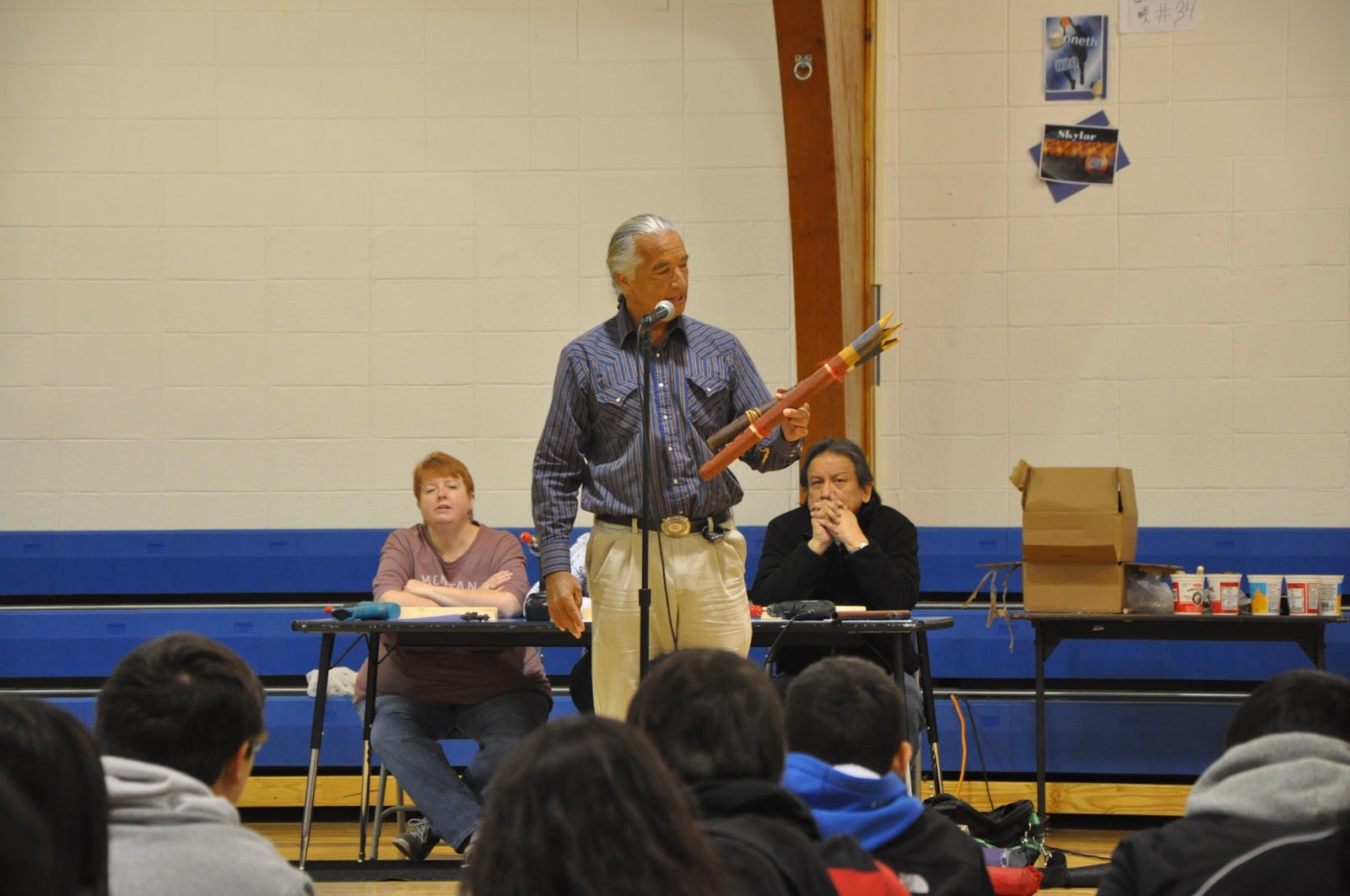
Tȟokéya Inažiŋ (The First To Arise; Kevin Locke) here with his great-grandfather's flute, shares the flute tradition with youth on the Standing Rock Sioux Indian Reservation.

In a discussion with Deacon Terry Star, enrolled member of the Standing Rock Sioux Tribe, about the wind and the flute, Deacon Star shared that he heard the four winds were brothers who represented the four cardinal directions. The West Wind, according to how Deacon Star heard it, didn’t just bring the thunderstorms, but also played the flute.

The wind, clouds, northern lights, and rainbow are expressed in the non-speaking languages of the Great Plains too.

In pictography, the wind is represented by a series of straight lines ending in a curly-cue or wave, and more lines indicate the strength of the wind. A whirlwind is represented by a swirl of four lines spiraling outward from the center of a circle. Clouds are represented sometimes by a simple line drawing of a cloud, but generally clouds are almost always depicted with rain and lightning. An arch above a straight line is a representation of the sky above the earth.

A pictograph for northern lights may be represented by night (a darkened circle with a line running through it top to bottom; or other variant) and fire (above the image depicting night). A rainbow is depicted by a series of arches over a straight line.


Dr. Jesse Johnson (Cheyenne River Lakota), center,  in front of a thípi.

In the sign and gesture language of the American Indians, there is a sign for wind as well. In a communiqué from Dr. Jesse Johnson, Blú Wakpá (Powder River), enrolled member of the Cheyenne River Sioux Tribe, the sign for wind takes a few forms, but its most basic execution involves holding the hands up, backs up at about shoulder height, fingers spread, and moving hands in a wavy tremulous motion in the direction of the wind.

Like pictography, the Plains Indian sign for cloud or clouds is inseparable from rain or lightning. The sign for rain consists of holding one’s hands up at shoulder height and drawing one’s hands down slowly two to three times. Kevin Locke, enrolled member of the Standing Rock Sioux Tribe, draws his hands down, backs up, and does “piano fingers” to sign rain. Lightning is signed by miming a jagged lightning pattern in mid air with either hand.

According to Dr. Johnson’s research into the Plains Indian sign language, the northern lights are depicted as “both hands, backs down, half closed, thumb and finger tips together, raised very high and spread with a sweep to indicate flashes. It should be done facing north.” Johnson adds that the sign is helped if the hands are swung apart in an arc at the highest point in executing the sign.


Wáǧačhaŋ (Cottonwood) on the floodplain of the Heȟáka Tȟa Wakpá.

The constant wind blowing across the open prairie steppe and through a vast open sky is a part of the Lakȟóta culture, or perhaps it is that the Lakȟóta are a part of the wind. They say that patterns on one’s fingertips indicate the direction the wind was blowing on the day of one’s birth. 


The Lakȟóta have the saying Takú šičá owás’iŋla kaȟwóg iyáyiŋ kte ló, which means, "All the bad things will blow away." 

On the vast open plains, grasses bow down and sway in motion as if in dance. Great cottonwood trees catch the winds and rattle their leaves in a deafening roar, like the crash of waves in the distant oceans. These ancient trees catch the smallest breeze and their leaves shush the world. 


Le tȟaté na maȟpíya tȟa makȟóčhe hečha lo. This is the land of sky and wind. 

Terry Star is an enrolled member of the Standing Rock Sioux Tribe. His traditional Dakȟóta name is Ȟé Ská, White Mountain, after Mount Rainier of which the top of the mountain bears snow year round. He is a deacon in the Episcopal Church and is currently a candidate for the Master of Divinity at Nashotah House Theological Seminary in Wisconsin. Star was raised by his late grandmother, Lillian Ironbull Martinez in the traditions of the church and the Dakota. For several years he has served as a youth pastor on Standing Rock and has frequently called on the stories he received from Lillian and her friends to relate biblical ones to the youth.

Jesse Johnson is an enrolled member of the Cheyenne River Sioux Tribe. His traditional Lakȟóta name is Blú Wakpá, Powder River, after Čhaȟlí Wakpá, which means Charcoal River and is the proper place name of Powder River. Johnson graduated with his Ph.D. in American Indian Studies. In his spare time Johnson teaches martial arts.


GLOSSARY:
Ablákela: Quiet, or windless, calm

Aŋptȟáŋiya: Vapor, mist that arises in the early morning

Čhumaȟpiya: Dew Clouds, Vapor Clouds

Haŋwákȟaŋ: Night-With-Energy, Northern Lights

Haŋwí: Moon

Heȟáka Tȟa Wakpá: River Of Elk, Little Missouri River

IčáluzA: Breeze

Ikápȟaŋyaŋ:To-Be-Beaten-Down-By-The-Wind

Iŋktómi: Trickster

Iŋyáŋ Wosláta Oyáŋke: Standing Rock Agency

Itáglaȟweya: With-The-Wind

Ité: Face

Iwóblu: Blizzard

KaȟwókA: To-Be-Carried-Along-With-The-Wind

Maȟpíya: Cloud, Sky, Heaven

Maȟpíya AkáȟpA: Clouds Overcasted

Maȟpíya NaȟléčA: The Sky Tears, a cloud burst of rain

Maȟpíya Okáksaksa: Partly Cloudy

Maȟpíya Šápe: Dark Clouds

Maȟpíya Tȟaŋíŋ: Buffalo-Hair Sky, Northern Lights

Maȟpíya Tȟó: Blue Sky

Maȟpíya Waníče: No-Clouds, Cloudless

Maȟpíya Wókičhuŋze: "Kingdom of Heaven"

Maȟpíyaya: Cloudy

Makȟóp’oya: A cloud of dust

Makȟóšíća: Badlands

Mašténaptapta: Sunlight-Waving, shimmer on the horizon on a hot day, mirage

Mníšoše: Water-Astir, Missouri River

Niyá Awičhableze: Enlightening Breath, spring wind

Okáǧa: South Wind

OkáluzA: Breeze

Op’ó: A cloud of dust or steam

OkpúkpA: Haze

P'ó: Fog

Takú Wakȟáŋ Škaŋškáŋ: Somthing With-Energy Moves/Moving; often contracted to Takú Škaŋškáŋ (Something Moving), or when talking about creation, simply Škaŋ.

Tȟaté: Air-In-Motion, Wind

Tȟatéiyumni: Whirlwind

Tȟaté’káoškokpa: Canyon Made-By-Wind, Wind Canyon

Tȟatóšni: Cold Wind

Tȟowáŋžiča: Completely Blue, Blue Oneness, a completely blue sky

Uyá: To-Blow-Leeward-Of-The-Wind

Wáǧačhaŋ: Cottonwood 

Wakíŋya: Thunder

Wanáği Tȟawáčhipi: Dance of The Spirits, Northern Lights

Waŋžíla Tȟo: Complete Blueness, Blue Oneness, a completely blue sky

Wayážo: To-Play-The-Flute, Flute

Wazíya: Lit. Pine, Power-Of-The-North, also a name of the North Wind

Wí: Sun

Wíačhéič’ithi: The Sun Makes A Campfire For Itself, Sundog

Wígmuŋke: Snare, Rainbow

Woȟpá: Meteor, Falling Star

Monday, October 28, 2013

Crying Hill: A Sacred Natural Landmark

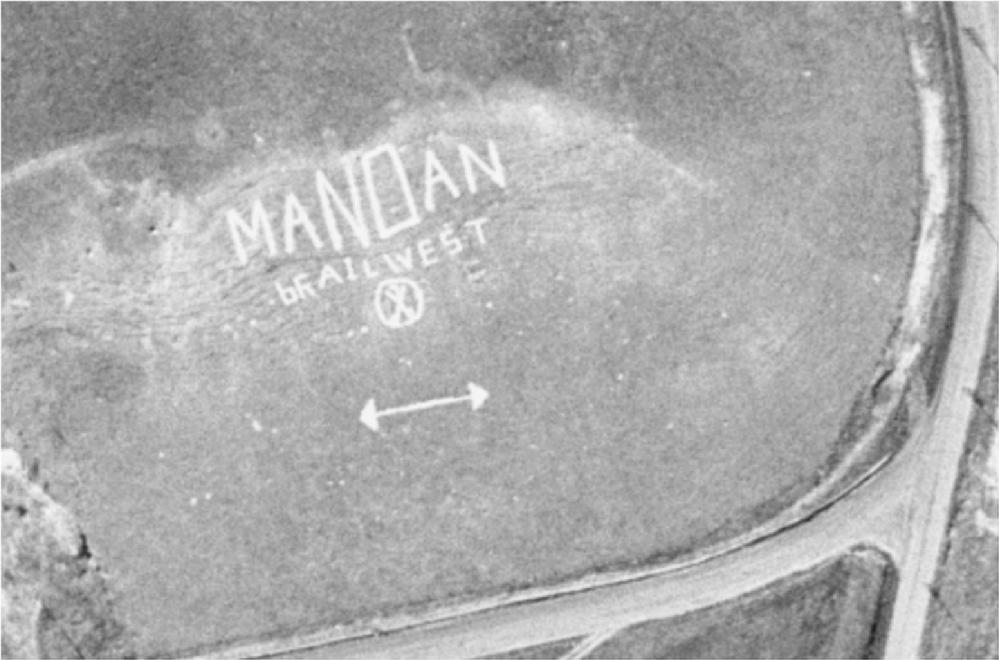
A view of Crying Hill from above in the 1930s.
Crying Hill: A Sacred Natural Landmark
Where The Hidatsa Became Two Tribes
Edited by Dakota Wind
Mandan, N.D. - In 1919, Colonel Alfred Burton Welch, a World War I veteran came to call the city of Mandan, N.D. home. There in Mandan, Welch began a new life as a store keeper, he also served as the post master, and founded the El Zagel Shrine. He spent the remainder of his life in the rolling hills of Heart River country along the Missouri River valley, and became fast friends with many of the Indian tribes there.

Captain AB Welch, seen here in his uniform from the 1898 Spanish-American War.

Welch became good friends with Chief John Grass. Grass was a distinguished Sihásapa Lakȟóta leader and veteran of the Sioux campaigns of the 1870s such as the Little Bighorn. Grass was known to the Lakota as Matȟó WatȟákpA, or Charging Bear. He had attended the Carlisle Indian School and became fluent in English to help his people fight the government in the new battlefields, the courtrooms. In March 1913, Grass adopted Welch as his son and bestowed on him Grass’ own name of Charging Bear.

While Welch lived in Mandan he took in all the lore about the site and more, and recorded as much as he could. One of those site stories he recorded was about the village and people who lived in the Mandan village along the Heart River near to Crying Hill.

Andrew Knudson painted this scene of the Corps of Discovery entering Black Cat's village near Knife River. A similar village would have graced the banks of Heart River below Crying Hill. That village was known to the Mandan as Large And Scattered Village.

The Mandan Indians have lived along the Upper Missouri River for about a thousand years and longer if you take into account their emergence story south of Mandan.

According to Welch, or the stories he attributed to the Hidatsa, Crying Hill is where the Hidatsa split into two distinct tribes. Welch uses the term Gros Ventres to name the Hidatsa. Here’s the story, Feb. 24, 1925:

The Gros Ventre were divided into two bands, and each of these bands followed their own chiefs. One starving winter-time they were reduced, by the absence of game and the failure, or destruction, of their crops, to eating the red seed pods of the wild rose bushes.

But, at last, through the prayers of a holy man among them, one lone, rogue buffalo bull, lean and staggering, wandered close to the village. He was chased and fell in the exact middle of the Heart River. Upon being dragged to the shore, it was decided that the meat should be divided in two equal portions, each band obtain the same amount of meat, bone and hide. When the division was made, one band was aggrieved and claimed that the other party had obtained the fatty portion of the stomach, while they had only the lean part.

The aggrieved band then decided that they would leave the other and go into a country which they would discover, and where they would be their own hunters and use their kill as they saw fit to do. Consequently this band did leave, traveled southwest into the country west of the Black Hills and east of the Big Horn Range, which territory they secured and where they have maintained themselves ever since that day.

These are the people known today as the Crows. They frequently come to visit the Gros Ventre; speak the same language and accept each other as cousins or relatives, but the real Gros Ventre call the crows the “Jealousy People,” on account of the separation, long ago.

Crow Indians Firing Into The Agency by Frederic Remington.

A variation of the story about the separation of the Hidatsa into two tribes came a few years earlier by way of Joe Packineau, Dec. 3, 1923:

“Crow Indians are Gros Ventre. I will tell you how it came about that they do not live together now. “That Indian village site in Mandan, we call it “Tattoo Face.” It is not Mandan village, but Gros Ventre or Hidatsa.

“There were two brothers born in that place a long time ago. One had a tattoo mark on his face like a quarter moon. It started on the cheek and ran down across the chin and up on the cheek on the other side of his face. So the people called him Tattoo Face. He became a very famous man among the Gros Ventre.  His brother was all right, and he was named Good Fur Robe. He also became a very great man and a wise man.

“Good Fur Robe was the one who had the corn seeds first. He gave one grain to each person and told them how to plant and look after the plant. Tattoo Face had tobacco before anyone else.

“Now the best part of a buffalo is his paunch. It is nice to eat. One time there was one buffalo which they killed right in the river there. He dropped dead in the middle of the Heart River when he was killed. The people drew him out for they were hungry. Good Fur Robe was the biggest chief, so he took the paunch when they divided the buffalo up between the two bands.

“That made [the] Tattoo Face people mad so that band decided that they would go away. They did go, and made their home in the country west of the Black Hills after that time.

“People call that people Crows now. But the Hidatsa do not. We call them “The Paunch Jealousy People.”

So the place where these people separated from the Hidatsa, is the Heart River at the Crying Hill (or Tattoo Face Village) which was Gros Ventre. The Mandan lived there too after that, I think.”

Crying Hill is located within the city of Mandan, ND. In 2003, Patrick Atkinson purchased Crying Hill in efforts to save the heritage site from further development. Read about Atkinson’s efforts to preserve Crying Hill

Friday, February 8, 2013

Preserving The Story Of Killdeer Mountain

An image of a soldier engaged in hand-to-hand combat with a warrior. The image is engraved upon the elevator doors on the ground floor and main floor. 
Preserving The Story Of Killdeer Mountain
Public Hearing: Energy Development At Site
By Dakota Wind
BISMARCK, N.D. – The polished hall outside the Missouri Room of the Bismarck State Capital building gradually filled with archaeologists, historians, tribal representatives and land owners from around Killdeer Mountain, all from different disciplines and walks of life, all concerned citizens of a proud state.

The study area of the Killdeer Mountain Conflict within the purple boundary.

The citizenry gathered in little groups here and there to introduce themselves and exchange greetings. It seemed like a fellowship of near universal concerns that brought everyone together, and life is like that. Sometimes it takes one thing to bring people together who might not have met in another situation.

An alarming amount of existing wells and proposed wells within the Killdeer Mountain Conflict area.

The hearing was scheduled at 2:00 PM CST and the fellowship exchanged the hall of polished stone and brass for the quiet cell of the Missouri River Room. A coterie of archaeologists clustered together in one corner, the tribal representatives quietly moved themselves to a corner close to the front, and historians scattered amongst the throng. Chit chat grew to a loud buzz, and though the Government and Veteran Affairs Committee was delayed an hour the motley collection of citizens didn't seem to grow impatient.

This is North Dakota, and sometimes things happen when they’re scheduled to, and other times things happen when they should. Farmers might call it natural time, Indians would agree.

Senator Triplett explains that next year marks the 150th anniversary of the Killdeer Mountain Conflict. "Its an opportunity for the state to reflect on the tragedy that shaped our statehood and include the story that has been under represented these long years," said Triplett, or something like that - my pen could not move fast enough.

The good people who made up the committee apologized for their unexpected delay and things quickly got started when Chairman Dever (Dist. 32, Bismarck) brought the gavel down with great ceremony and authority.  The hearing was to hear Senate Bill 2341, a proposal by senators on either end of the political spectrum, introduced by Sen. Wardner (Dist. 37, Dickinson) but the voice of the bill was provided by Senator Triplett (Dist. 18, Grand Forks).

Senate Bill 2341 proposed to appropriate $250,000 to do an archaeological and historical survey of the Killdeer Mountain conflict study area. A packed room of about forty-five people, including the good senators, heard testimony from several individuals representing various entities, and a few who spoke as private citizens.

Paaverud maintained an impeccable composure of respect for the committee as he endorsed the Heritage Center's support of the bill.

Mr. Merlan Paaverud and Ms. Fern Swenson represented the interests of the State Historical Society of North Dakota and voiced the SHSND’s endorsement of this bill. Ms. Swenson offered that the Killdeer Mountain study area consists of 17,433 acres or about 23 square miles, a core area of about 5,421 acres and only about 569 acres has been surveyed. Swenson also shared that the site has had a continual cultural occupation for the past 3,000 years.

Dr. Isern addresses the committee. He said his piece in about five minutes or less and gave some handouts with points explaining the nature of heritage preservation. 

Dr. Tom Isern, Director of the Institute for RegionalStudies, rendered a concise and wonderful explanation of the intrinsic value of Killdeer Mountain as a heritage site and acknowledged the attraction of the site to hikers and lovers of history and nature who would be drawn to this site, as many like-minded visitors have in the past. Dr. Isern expressed his institute’s support of the bill.

An immaculately groomed Aaron Barth (looking at the camera) visited with Mr. Jepson of Killdeer.

A few concerned citizens took to offering their support of this bill. Mr. Aaron Barth, founding writer of The Edge Of The Village, shared the need to survey and catalogue the Killdeer Mountain as a start to preserve the story of the site, if the natural integrity of the site is to be developed. “There’s a story to tell, and we must do all we can to share it,” as he compared the need to tell the stories of all combatants, like the American Civil War.

Without waver or hesitation, Young shared a resolution regarding sacred places from the National Congress of American Indians.

Ms. Waště'Wiŋ Young, Standing Rock Tribal Historic Preservation Officer, took the stand and pointedly stated that “the Indian voice has yet to be heard.” Young boldly shared with the committee a resolution adopted by the National Congress of American Indians in October of 2012 regarding the protection and preservation of sacred places. She read the whole thing, expressed her office’s support of Senate Bill 2341, and quietly departed.

Bravebull-Allard representing Standing Rock Tourism supports this bill.

Ms. LaDonna Bravebull-Allard, Director of Standing RockTourism, shared her lineage going back to survivors who were at Killdeer Mountain when General Sully forced his command on the Yanktonai Dakota, Hunkpapa Lakota and Santee Dakota. Bravebull-Allard spoke about how Killdeer Mountain was a sacred site, not just to the Dakota and Lakota people, but the Mandan, Hidatsa, Chippewa and Assiniboine. With practiced confidence of a story-teller she shared that the site was where Sun Dreamer ascended Killdeer Mountain in 1625. Bravebull-Allard’s office supports this bill.

St. John spoke with dignified authority, less than two minutes, and left many of the committee nodding their heads in approval of her gracious support.

Ms. Tamara St. John, Sisseton-Wahpeton Tribal Historic Preservation Officer, eloquently and briefly echoed Young’s and Bravebull-Allard’s sentiments of protecting a special site like Killdeer Mountain and her office’s support of the bill.

Sand called for the state to move carefully and deliberately to preserve North Dakota's heritage sites.

Mr. Rob Sand, a representative of the Killdeer MountainAlliance, a tall gentleman with the gait of a lifelong rancher took to the podium briefly and passionately encouraged oil development to wait. Sand offered the support of the Killdeer Mountain Alliance in favor of the bill.

Rothaus, self-described hard-boiled skeptic, put the bill on a scale but explained the overwhelming need to preserve as much of the story of Killdeer as possible and endorsed the bill.

Dr. Richard Rothaus, founder and director of TrefoilCultural and Natural, drove like a mad man from his office in Sauk Rapids, MN to render cold and succinct explanation of the Killdeer Mountain conflict’s standing in US military history as one of the largest, if not the single largest, Indian-White conflict in the west and why North Dakota needs to preserve as much of the conflict site and stories as possible. A former university professor, Rothaus came across brutally blunt but also exceptionally honest. He also endorsed his support of the bill.

Dvirnak proudly wore a Fighting Sioux windbreaker to the hearing. 

Lastly, Mr. Bryan Dvirnak, a lifelong rancher on family-owned and managed land at Killdeer Mountain, shared his family’s generations-long commitment to the preserving the cultural and historic integrity of the conflict site. “No one has done more to preserve and protect the site. We’re all for preserving the property,” said Dvirnak in a moving testimony to the committee. Dvirnak expressed that his brother could best articulate how their family has forged relationships with various Indian communities in state and  into Canada. The Dvirnaks have graciously allowed traditional ceremonies and prayers to be conducted on their land throughout the years.

Dvirnak, regardless of his family’s openness to the American Indian presence on his family’s land, managed to convey his open skepticism of the bill. “What will the [archaeological] study do?” he wondered aloud. Dvirnak conveyed his disillusionment with the bill, the sharpest point of his argument manifested itself in his question about what the bill would mandate him to do on his own land.

The bill doesn’t mandate anyone to do anything on their own private land. In fact, the bill mandates that the archaeologists who conduct the investigation must acquire the permissions of all landowners in the study and core areas of the Killdeer Mountain conflict. Senator Dever, the chairman of the Government and Veterans Committee, understood Mr. Dvirnak’s position and told Sen. Triplett to include language in Senate Bill 2341 that expressly and clearly articulates a mandate for archaeologists to acquire permission of landowners to survey on their land.

Mr. Dvirnak and his family have the best intentions, a family mission taken to heart, passed down from father to sons, to preserve the heritage of Killdeer Mountain. They opened their lands in the past to the Indian communities. They also donated a tidy collection of artifacts from the KilldeerMountain conflict to Dickinson State University.

They did this because there’s a story that needs to be preserved and shared, and that’s something that everyone who testified can agree. 

Friday, February 1, 2013

Watering My Pony In The Winter

Interstate 94 in North Dakota in the heart of winter.
Watering My Pony In The Winter
Concurrent Lives Throughout Time
By Dakota Wind
BISMARCK, N.D. - Sometimes when I’m doing simple mundane things in my car I like to imagine instances of myself in another time. For instance, yesterday was bitterly cold, the kind of cold that numbs your face and mouth making it difficult to talk, like your mouth is full of cotton, that you can’t pronounce anything correctly, almost like you’re unintentionally doing an Arnold Schwarzenegger or a Godfather impression. It’s that cold. I digress.

So I was filling my car, and I imagined for a moment, myself in a field of snow and frozen grass on a day as cold as the Godfather, with a horse. A grey pony, because my car is grey, prancing in an earnest attempt to keep himself warm in the bracing cold, and instead of gassing my car up I’m breaking ice down by the river so that my pony can get water. I’m watering my pony.


 Johnny Depp as Barnabas Collins. Interesting movie.

Say that I have an active imagination. I like to tell my boys that I wanted to give them names like Magneto, Wolverine and X, or Mayhem, Maverick and Havok, or Han, Anakin and Lando. I like to tell them stories about how I found one in a field in a smoldering crater, another was a government experiment thrust into my wife’s arms to raise but one day The Man will come to collect, or that the youngest was a vampire named Barnabas Collins.

Maybe I’m a reincarnated brave from the days of warriors. Maybe I’m a soldier from the French and Indian War. I can’t say with any certainty that I believe in reincarnation, but I dream of long ago battles, long ago love, and long ago death. Maybe dreams transcend time and I’m living multiple lives concurrently throughout history.

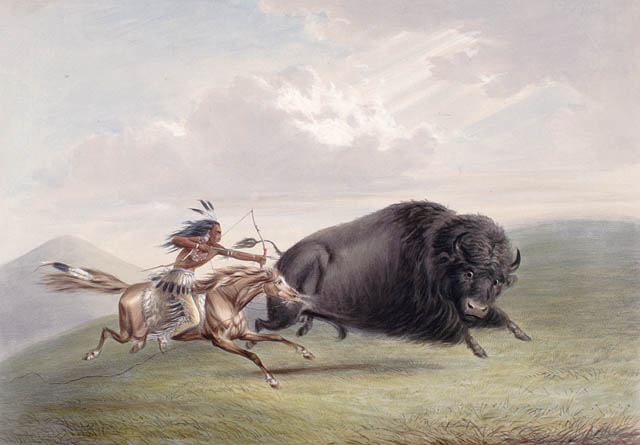
In the days of tradition, a good hunter could bring down a bison with five arrows. A braggart would say that he brought one down with three. 

When I came back to reality, shivering from watering my pony, I replaced the fuel nozzle and twisted the gas cap back on. The warrior from long ago would have patted his pony, threw his bison robe over his shoulders and adjusted it for maximum warmth before mounting up – I turned my ignition and adjusted the heat to blast my windows and feet. I to go work to sit at my computer, and the warrior goes on his hunt.

What makes for an interesting twist here with my curious imaginings is that a few weeks ago my youngest son told my beloved bride that he dreamt I was riding horse and hunting bison.

It made me smile. I’m in the right place at the right time and doing the right thing.

Thursday, January 31, 2013

Winter On The Great Plains

Sundogs. In Lakota they're referred to as campfires.
Cold On The Great Plains
Winter & Sundogs On The Missouri River
By Dakota Wind
BISMARCK, N.D. - This morning was cold. It’s not enough to say it was cold. This morning was a little windy, and it’s not enough to say that it was windy because this is the Great Plains, the land of sky and wind. I like to think of it that way. It sounds minimal and majestic.

This morning was cold. It was the kind of cold that reaches through one’s clothes and seizes your intimates with its freezing embrace and just squeezes the warmth right out. It was the kind of cold that made me blink back tears when I dared to step out and start my little beast.

The snow and ice sounded brittle like styrofoam when I stepped on it. Jesus, on the Great Plains it gets cold enough that even the snow and ice groan and ache.

My little beast wasn’t feeling like a beast and it started like a crotchety bastard. I swear it fought the ignition, and then sputtered thrice before defiantly turning over. On the Great Plains, cars have character and mine was acting like a frosty bitch.

...I filled a bowl with frosted flakes which seemed to fit the feel of the morning so far...

I let it warm up in the garage whilst I finished prepping for the day. I dived into the dresser and rolled into a pair of khaki pants, thick woolen socks and a Def Leppard t-shirt, and then I filled a bowl with frosted flakes which seemed to fit the feel of the morning so far. My son Isaiah – we call him Zay – meanwhile had already broken fast, dressed and took care of our little pup that the boys call Penny, but I like to call Pensethilea after the Amazon warrior whom Achilles fell in love.

We got in the car and found that the frosty bitch had warmed up agreeably and we set off down the road.

The sun hadn’t yet risen as we pulled onto the main road. My car seemed to protest against acceleration as I brought the needle up to fifty-five. The drive was normal, that is to say it was boring and uneventful but for the promise of the sun, of light and warmth, as purple twilight became golden dawn.

I turned my car back onto the road and drove into the sunrise and sundogs.

On each side of the sun as the daystar ascended into the sky appeared the striking phenomena commonly called sundogs. I don’t know about how or why the natural event became known as a sundog, and I’ve never been particularly fond of the term.

I dropped my boy off at school and told him to have fun, but not too much fun. I have a benediction I like to impart on my boys when I drop them off at school, “Work hard. Study. Graduate, and go to college.” I don’t know that they care to hear me say it or even if they listen, but its something that I remember by grandmother said to me. I don’t recall that I listened all the time either when she said it.

I turned my car back onto the road and drove into the sunrise and sundogs.

The Lakota people have the traditional story about the sundog, and know it by another name, Wi’ačé’ičiti. It means The Sun Makes A Campfire For Itself.  Suffice to say that only on the Great Plains does it get cold enough that even the sun makes fires for itself.

It was an awesome site to witness. The sundogs, the campfires if you will, burned rainbows on each side of the sun. The sun itself was set in colors of purple and pink and nearly unbearable to directly at, but I imagine that it’s like looking at the first dawn of creation. The campfires are still hanging in the air when I park my little beast.

...silent beauty of the morning sun and the campfires make me feel small inside as I stand in my reverie...

The campfires remind me of my childhood. They remind me of the living room in my grandmother’s home back on Standing Rock.  The living room had floor to ceiling windows on one side and another large window on another side which allowed for sunlight from morning until late afternoon. I’m reminded of sunrises over Lake Oahe on long-ago mornings, and of my grandfather, my lala, coaxing his car to start so he could take my brother and I to school.

The immense and silent beauty of the morning sun and the campfires make me feel small inside as I stand in my reverie. I wouldn’t call myself traditional, but I’m suddenly inspired to reach into my glove compartment and take out my tobacco. I remove my glove and delicately reach for a pinch of sweet potent tobacco and sprinkle it betwixt my fingers in fond remembrance of my grandparents.

They watched over me and now its my turn to watch over my sons.