Showing posts with label Crow Indians. Show all posts

Monday, October 28, 2013

Crying Hill: A Sacred Natural Landmark

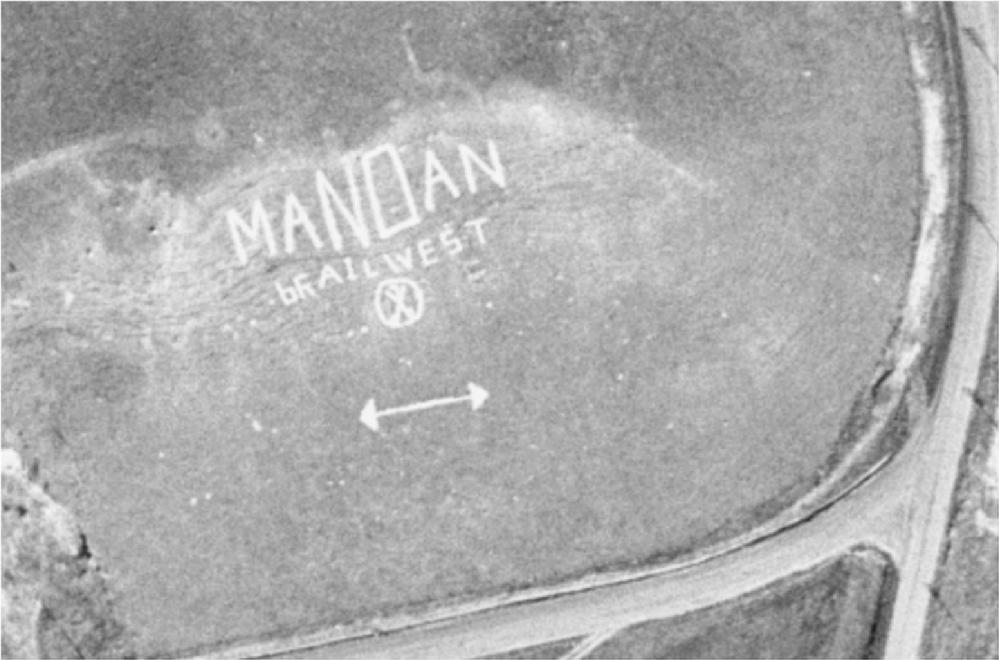
A view of Crying Hill from above in the 1930s.
Crying Hill: A Sacred Natural Landmark
Where The Hidatsa Became Two Tribes
Edited by Dakota Wind
Mandan, N.D. - In 1919, Colonel Alfred Burton Welch, a World War I veteran came to call the city of Mandan, N.D. home. There in Mandan, Welch began a new life as a store keeper, he also served as the post master, and founded the El Zagel Shrine. He spent the remainder of his life in the rolling hills of Heart River country along the Missouri River valley, and became fast friends with many of the Indian tribes there.

Captain AB Welch, seen here in his uniform from the 1898 Spanish-American War.

Welch became good friends with Chief John Grass. Grass was a distinguished Sihásapa Lakȟóta leader and veteran of the Sioux campaigns of the 1870s such as the Little Bighorn. Grass was known to the Lakota as Matȟó WatȟákpA, or Charging Bear. He had attended the Carlisle Indian School and became fluent in English to help his people fight the government in the new battlefields, the courtrooms. In March 1913, Grass adopted Welch as his son and bestowed on him Grass’ own name of Charging Bear.

While Welch lived in Mandan he took in all the lore about the site and more, and recorded as much as he could. One of those site stories he recorded was about the village and people who lived in the Mandan village along the Heart River near to Crying Hill.

Andrew Knudson painted this scene of the Corps of Discovery entering Black Cat's village near Knife River. A similar village would have graced the banks of Heart River below Crying Hill. That village was known to the Mandan as Large And Scattered Village.

The Mandan Indians have lived along the Upper Missouri River for about a thousand years and longer if you take into account their emergence story south of Mandan.

According to Welch, or the stories he attributed to the Hidatsa, Crying Hill is where the Hidatsa split into two distinct tribes. Welch uses the term Gros Ventres to name the Hidatsa. Here’s the story, Feb. 24, 1925:

The Gros Ventre were divided into two bands, and each of these bands followed their own chiefs. One starving winter-time they were reduced, by the absence of game and the failure, or destruction, of their crops, to eating the red seed pods of the wild rose bushes.

But, at last, through the prayers of a holy man among them, one lone, rogue buffalo bull, lean and staggering, wandered close to the village. He was chased and fell in the exact middle of the Heart River. Upon being dragged to the shore, it was decided that the meat should be divided in two equal portions, each band obtain the same amount of meat, bone and hide. When the division was made, one band was aggrieved and claimed that the other party had obtained the fatty portion of the stomach, while they had only the lean part.

The aggrieved band then decided that they would leave the other and go into a country which they would discover, and where they would be their own hunters and use their kill as they saw fit to do. Consequently this band did leave, traveled southwest into the country west of the Black Hills and east of the Big Horn Range, which territory they secured and where they have maintained themselves ever since that day.

These are the people known today as the Crows. They frequently come to visit the Gros Ventre; speak the same language and accept each other as cousins or relatives, but the real Gros Ventre call the crows the “Jealousy People,” on account of the separation, long ago.

Crow Indians Firing Into The Agency by Frederic Remington.

A variation of the story about the separation of the Hidatsa into two tribes came a few years earlier by way of Joe Packineau, Dec. 3, 1923:

“Crow Indians are Gros Ventre. I will tell you how it came about that they do not live together now. “That Indian village site in Mandan, we call it “Tattoo Face.” It is not Mandan village, but Gros Ventre or Hidatsa.

“There were two brothers born in that place a long time ago. One had a tattoo mark on his face like a quarter moon. It started on the cheek and ran down across the chin and up on the cheek on the other side of his face. So the people called him Tattoo Face. He became a very famous man among the Gros Ventre.  His brother was all right, and he was named Good Fur Robe. He also became a very great man and a wise man.

“Good Fur Robe was the one who had the corn seeds first. He gave one grain to each person and told them how to plant and look after the plant. Tattoo Face had tobacco before anyone else.

“Now the best part of a buffalo is his paunch. It is nice to eat. One time there was one buffalo which they killed right in the river there. He dropped dead in the middle of the Heart River when he was killed. The people drew him out for they were hungry. Good Fur Robe was the biggest chief, so he took the paunch when they divided the buffalo up between the two bands.

“That made [the] Tattoo Face people mad so that band decided that they would go away. They did go, and made their home in the country west of the Black Hills after that time.

“People call that people Crows now. But the Hidatsa do not. We call them “The Paunch Jealousy People.”

So the place where these people separated from the Hidatsa, is the Heart River at the Crying Hill (or Tattoo Face Village) which was Gros Ventre. The Mandan lived there too after that, I think.”

Crying Hill is located within the city of Mandan, ND. In 2003, Patrick Atkinson purchased Crying Hill in efforts to save the heritage site from further development. Read about Atkinson’s efforts to preserve Crying Hill

Wednesday, September 4, 2013

Pahá Kȟoškálaka: Young Man’s Butte

Pahá Kȟoškálaka: Young Man’s Butte
Plains Indian Warfare And Bravery
By Dakota Wind
RICHARDTON, N.D. – The Lakȟóta and the Kȟaŋğí (Crow) were once traditional enemies, that is, before the reservation era, these two tribes fought for war honors such as counting coup and stealing horses. Once in while however, these two tribes came together in great violent clashes that could not be called skirmishes, but battles.

At times warfare amongst the tribal nations in the pre-reservation era also involved the abduction of women and children. Sometimes a warparty might be mustered for the grim sake of revenge too.

The warparty that went out to steal horses did so, not just for war honors, but to keep the enemy off-balance. Having horses meant that a Thiyóšpaye, extended family, had the power to move a camp swiftly and further than those without horses. Horses meant a change in hunting too. No longer did the Oyáte, people, have to organize a community-wide effort to startle and direct a bison stampede over a cliff, which risked the safety of runners and scouts, and if unsuccessful, left them facing starvation.

Sometimes a horse raider might take advantage of a frenzied moment and on impulse abduct a woman too. That woman might then be married into the tribe. This was practical too as inter-tribal marriage, whether by formal trade or abduction, kept the blood lines open.

The young man’s self-sacrifice was regarded as gesture of great courage...

The John K. Bear winter count, a pictographic record of the Iháŋktȟuŋwaŋna Pabáska, Cuthead Yanktonai, recalls a full scale battle in 1710 as the year they wiped out another group whom they referred to as Wičóšawaŋ.

Cedric Goodhouse Sr. carries a story which came to him from his father, the late Innocent Goodhouse, about how a Lakȟóta horse-stealing raid to Crow country led to a young man stealing a woman there and bringing her back to his Thiyóšpaye. She grew to dearly love the Lakȟóta, and they her. When she took her journey, the Lakȟóta dressed her in her finest Crow regalia and took her home.

Another story handed down from Innocent Goodhouse was that a Lakȟóta Thiyóšpaye was camped at the base of Fire Heart Butte, north of the present-day North Dakota and South Dakota border just off HWY 1806. Late one night, the Crow made a successful horse-stealing raid to recover horses which were taken from them.

North of Spearfish, SD is the sight of Crow Buttes, where according to story, a Crow warparty were killed to the last man on the buttes there in a bloody standoff. Nine Crow Indians were shot and left there. A tragedy for certain, but also a story of bravery for not one of them pleaded for his life.

About three miles east of present-day Richardton, ND on the north side of I-94 is a little butte. It’s an unassuming hill and resembles many others on the western plains.  

The story goes, a long time ago, that a Crow hunting party numbering 106 came east to hunt. Perhaps drought drove bison east that summer, as drought drove the Húŋkpapȟa east across the Mníšoše, Missouri River, in 1863 to hunt bison which had migrated out of the dry airy region.

The Lakȟóta happened upon the Crow hunting party, immediately surrounded them, and fought them, for the Crow were not just hunting but trespassing on Lakȟóta territory. The Crow fought to the last, until there was one left, a young man.

The young Crow ascended the butte, whereupon he sang his last song. When he finished his song he took his own life rather than be taken by the Lakȟóta.  The young man’s self-sacrifice was regarded as gesture of great courage by the Lakȟóta who regarded the butte thereafter as a very significant and special place. From that day forward, they came to call it Pahá Kȟoškálaka, Young Man’s Butte.

Thursday, August 4, 2011

Crow Buttes, A Site of Two Battles

A panoramic view of Crow Buttes.  For an image of higher resolution, and to see a few other images, visit: https://www.dropbox.com/gallery/36398036/1/Black%20Hills%202011?h=4c9afb
Crow Buttes, South Dakota
A Site of Two Battles
By Dakota Wind
CROW BUTTES, S.D. - In 1822, the Lakota and the Crow engaged in an outright battle here at this site, now called Crow Buttes.  According to the research conducted by the Butte County Historical Society and the Game, Fish, and Parks Commission, a Lakota war party came upon a Crow camp and utterly ravaged it and violated the women. 

The Crow wanted revenge, and left what was left of their village (elders, women, and children) north of the buttes at Sand Creek.  The Crow war party ascended the larger butte for a better vantage of the broad landscape.  It was a hastily recruited war party and they brought only weapons, no water. 

The Crow war party was surrounded at the butte, pinned there by the Lakota war party.  The weather on the plains being as it is, semi-arid, no rainfall to relieve the Crow war party was in sight, and they perished from lack of water.

According to the research party mentioned in the first paragraph, a nearby canyon to the northwest of the buttes was littered with the skulls of the Lakota who "died like flies after contracting a fever from the Crows." 

I disagree Butte County Historical Society and Game, Fish, and Parks Commission. 

According to the Blue Thunder winter count (amongst several other winter counts) the Hunkpapa Lakota engaged in a battle with the Crow at Crow Buttes in 1858.  Using the same strategy thirty years before, the Lakota waited out the battle letting the Crow again perish of thirst at the buttes.  According to the Blue Thunder winter count, the Hunkpapa Lakota war party climbed the butte and executed the Crow war party - there were nine Crow warriors, all shot in the head.

After the execution, the Crow war party, all nine of them, were beheaded, their bodies left for scavengers. 

Today Crow Buttes, sits in Harding County, north of Belle Fourche, SD.  It is a lonely and serene sight despite the terrible events which occurred there.