Wednesday, November 20, 2013

The Origin Of The Prairie Rose

The Origin Of The Prairie Rose
The First Love Of Whirlwind
As told to Rev. Aaron Beede, Sept. 1, 1921
FORT YATES, N.D. - A long time ago, the surface of makȟá (the world) which is the blanket of Makȟóče (Grandmother Earth), was desert and held no beauty. Tȟatéiyumni (Whirlwind) had it for his playground.

And Makȟóče was sad at heart because her blanket had no beauty with flowers and living things with bright colors, and she said, “There are flowers in my heart. Oh, that they might be on my poor blanket. Ugly Tȟatéiyumni.” And when a flower of her heart, to please her, would go up onto her blanket, Tȟatéiyumni would rush for the flower saying, “What business has she in my playground of dust and storms?” And he would blow out her life.

At last Uŋžíŋžiŋtka (Prairie Rose), her mother’s darling flower, went up onto Makȟóče’s blanket by a water spring, and Tȟatéiyumni rushed upon her crying, “How sweet her breath is! And her dress is clean and pretty. I like her. It is not in my heart to blow out her sweet life. She may have part of her playground for her home and I shall name her Uŋžíŋžiŋtka.”

Then others came and Tȟatéiyumni liked them and played with them and became gentler, and then other flowers and grasses and trees came, and Tȟatéiyumni played with them and became still more gentle.

So the Dakȟóta put the colors of Uŋžíŋžiŋtka on their garments and lodges, and when Tȟatéiyumni sees this color he remembers his first love for Uŋžíŋžiŋtka and he becomes too gentle to kill the people, though he sometimes plays with them boisterously.  

Makȟá: Earth
Makȟóče: Grandmother Earth
Tȟatéiyumni: Whirlwind
Uŋžíŋžiŋtka: Prairie Rose

Monday, November 18, 2013

The Wind Is The Spirit Of The Great Plains

Tȟaté’káoškokpa (Canyon Made-By-Wind), or Wind Canyon, along the Heȟáka Tȟa Wakpá (River Of Elk; Little Missouri River) in Makȟóšíća (Badlands, N.D.; Theodore Roosevelt National Park).
The Wind Is The Spirit Of The Great Plains
The Sky In Word, Pictograph, And Sign
By Dakota Wind
THE GREAT PLAINS - The wind has been a constant presence on the open prairie since creation, and has shaped the landscape with its caress. It races across the open sky with the summer and winter storms, and flows about the landscape playfully, fitfully, and angrily. It is the very essence of the Great Plains.

The Lakȟóta have several words for the wind and its attributes such as tȟaté (air in motion), uyá (to blow leeward of the wind), kaȟwókA (to be carried along with the wind), ikápȟaŋyaŋ (to be beaten down by the wind, as with grass) or itáglaȟweya (with the wind). OkáluzA, or ičáluzA, refers to a breeze.


When a strong wind is present, or suddenly appears, during prayer or at a gathering, the wind might even be referred to as takú wakȟáŋ škaŋškáŋ (something with great energy is moving). A whirlwind is called tȟatéiyumni, which some regard as a sign that a spirit is present.

There is only one word to describe a windless day, ablákela (calm or quiet).

When the wind blows cold, such as it does in the winter months, the Lakȟóta refer to it as tȟatóšni. The cold winter wind had a story of its own, and in the days of legend, before steamboats and trains, before soldiers and missionaries, when the camps moved across the prairie steppe in the fall to establish winter camps, they told the story of Wazíya, that which some call a giant, or the Power Of The North. Wazíya blew his cold breath across the world. 


The blizzard is known to the Lakȟóta as Iwóblu. 

But even the wind has an origin. There are various stories about the wind, but the basics are that after creation, Tȟaté (Wind) took the daughter of Old Man and Old Woman, Ité (Face) as his wife. They had four sons, the Four Winds. Iŋktómi, the Lakȟóta trickster, persuaded Ité to begin an affair with Wí (the Sun) to gain status. 


The affair backfired, and Takú Wakȟáŋ Škaŋškáŋ gave Haŋwí (the Moon) her own domain, and sent Old Man and Old Woman to earth along with Ité. Ité was ever after parted from her husband, Tȟaté, and their four sons. Ité, however, had a fifth son, Tȟatéiyumni (Whirlwind). Woȟpá (Falling Star Woman), daughter of Wí and Haŋwí, was sent to earth. Woȟpá became the wife of Okáǧa (the South Wind) and they raised Tȟatéiyumni as their son.

They say as the summer wanes and turns to autumn, the wind changes with the weather. That change in the wind is the breath of North. The cold was and is deadly, never to be feared, but respected. The North spreads his robe across the sleeping land. The North makes hunting game easier to track. In fact, the Lakȟóta used to dance in snowshoes in the blanket of the first snowfall. They rejoiced in the weather and embraced the deep cold. 


In the spring or autumn mornings, in the early morning just as the sun rises, there appears a mist. The Lakȟóta call this Aŋptȟáŋiya. Regular fog is P'ó. 

Sometimes the winter seems like it will never end, even for people who’ve lived here for thousands of years. Gray skies smother the light for days on end. Everywhere the land is monochrome. Months without color took its toll on the people. These days it’s called Seasonal Affective Disorder (SAD).

For the Lakȟóta people, even the winter holds the promise of light and hope.

On cold days one might see what they call a sundog, but its not every cold day that features a sundog. The ancient Greeks called it a “mock sun.” The Romans called it a “double sun.” The English in the early 1400s said the sundog was a representation of the Holy Trinity.


This Campfire-Of-The-Sun is seen here above the Mníšoše (Water-Astir; Missouri River) and Iŋyáŋ Wosláta Oyáŋke (Where Standing Rock Dwells), the Standing Rock Sioux Indian Reservation

The 
Lakȟóta call the sundog Wíačhéič’ithi which means The Sun Makes A Campfire For Itself. The story of this beautiful name for this awesome phenomenon comes to me from Cedric Good House: A long time ago the people experienced several days of bleak grayness. People began experiencing bad dreams and others became depressed. It was the bad dreams that haunted the grandchildren that moved a grandfather to leave his village to pray for an end to the grayness. When he returned he called everyone in to the center of the village and selected two groups of young men to go the east of the camp and build two campfires. They did as they were told and returned to the camp where the people prayed. A lightening of the grayness indicated that morning had arrived. The clouds broke and the sun burst through the grayness. As the sun rose above the horizon, the campfires ascended into the sky with it. The people rejoiced and sang.

Just as there are several words for wind, the Lakȟóta have some words for clouds, which are of the sky. Maȟpíya in itself is a reference to the sky, or heavens. Maȟpíya tȟó, is the blue sky. Maȟpíya šápe is dark clouds. Maȟpíya akáȟpA is a cloudy overcast. Maȟpíya naȟléčA literally “the sky tears,” is a reference to a cloud burst of rain. Maȟpíya okáksaksa is partly cloudly. Maȟpíyaya is cloudy. Čhumaȟpiya means “dew clouds” or “vapor clouds.” Op’ó is a cloud of dust or steam. OkpúkpA is cloudy, hazy, or unclear. Makȟóp’oya is a cloud of dust.

When the Christian missionaries arrived they needed to articulate the Kingdom of Heaven, and coined the term Maȟpíya Wókičhuŋze, which literally means “Kingdom of the Sky.”


The northern lights above North Dakota. Unknown photographer.

The northern lights mean something very special to the Lakȟóta. Maȟpíya Tȟaŋíŋ is the northern lights, but is literally, “Buffalo-hair Sky.” Wanáği Tȟawáčhipi, a reference for the northern lights meaning “Dance Of The Spirits,” and there’s a story, or experience, about out there but it won't be shared here. Haŋwákȟaŋ, another word for the northern lights, literally means “Night With-Energy.” It was a tradition of some Lakȟóta to burn incense, sweet-grass or cedar, when the northern lights appeared.

Sometimes, just as there is no wind, there are no clouds in the sky. There are a few ways of describing a day without clouds: Maȟpíya waníče, there are no clouds. Waŋžíla Tȟo, blue oneness or complete blueness, or tȟowáŋžiča, the sky is blue.

In the spring or summer, storms or rainfall strikes in daylight. The Lakȟóta have the tradition that the Wakíŋya, Thunder-Beings, bring the storms, but not just to bring rain. Lightning flashes from their eyes, claws, and wings. With lightning and rain the Wakíŋya cleansed the earth and destroyed or perhaps chased out the negative entities which settled into the lands. At the end of daylight storms the plains are treated to rainbows stretching from horizon to horizon, a grand arch reaching to heaven.


In the blistering summer months mirages appear on the horizons. The Lakȟóta call this shimmer of air at the edge of the earth Mašténaptapta. 


A double rainbow in Theodore Roosevelt National Park, by Travel Garden Eat.

The Lakȟóta refer to rainbows as Wígmuŋke, A Snare. It is said that the wígmuŋke, causes the storm to end by trapping it, so that no more rain can fall. No one points at wígmuŋke with their fingers, but use their lips or elbows if they gesture to it.

In the spring, the wind signals another change. The Lakȟóta call this wind Niyá Awičhableze, The Enlightening Breath. This is the first spring wind upon which the meadowlarks return. It’s the time of year in which the Lakȟóta carefully watch for the ice to break on the Mníšoše, the Water-Astir (Missouri River), the geese return, and when the bison bear their calves.

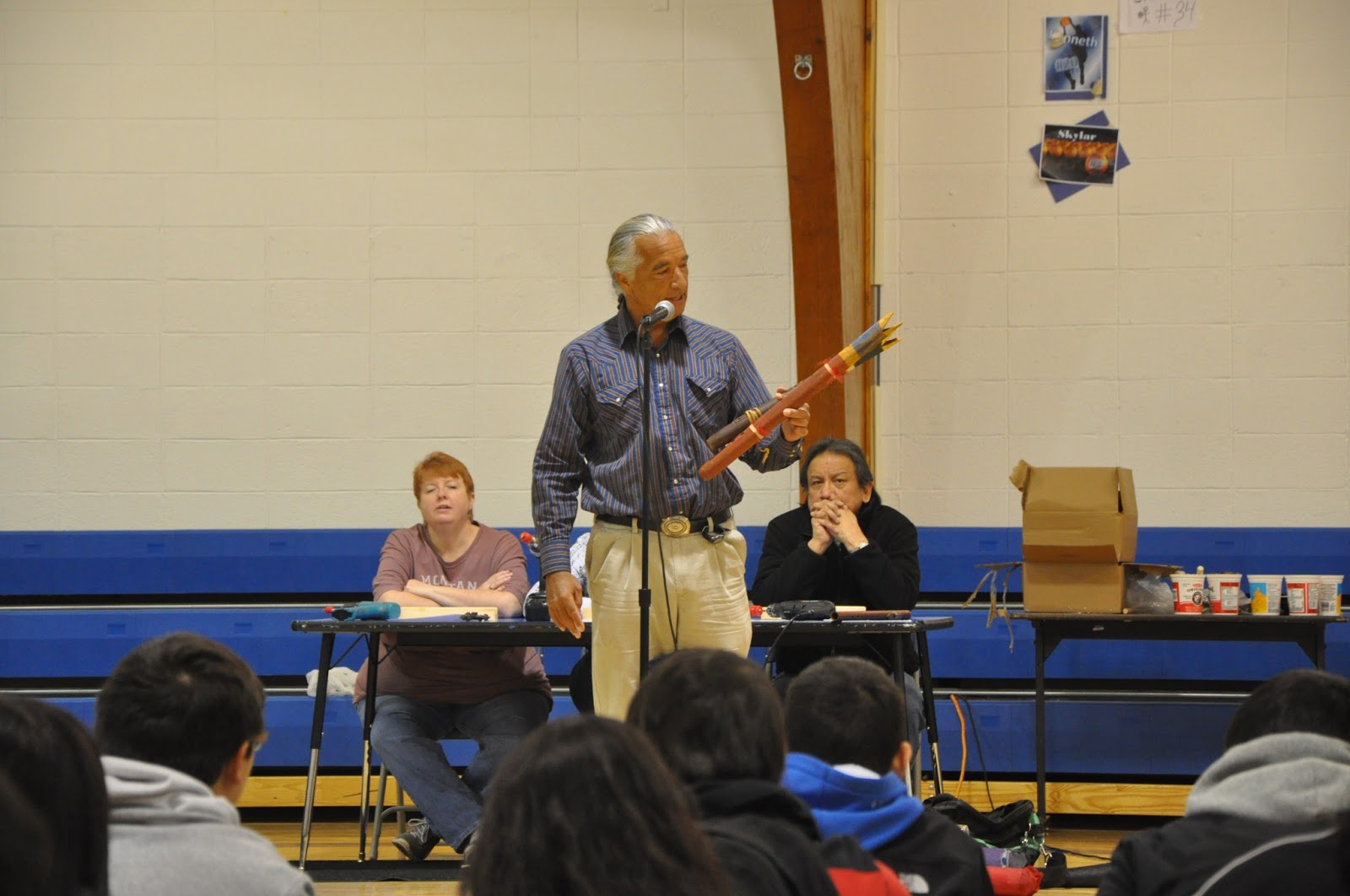
One of the names that the Lakȟóta people have for the courting flute is Wayážo, which means To Play A Flute. It is the essence of the wind. Flutes are traditionally made from red cedar. The heart of the wood, the soft red center, is removed with the intention of that space becoming filled with the flute-maker’s own heart. Breath flows through the flute and the wind carries its haunting song.


Tȟokéya Inažiŋ (The First To Arise; Kevin Locke) here with his great-grandfather's flute, shares the flute tradition with youth on the Standing Rock Sioux Indian Reservation.

In a discussion with Deacon Terry Star, enrolled member of the Standing Rock Sioux Tribe, about the wind and the flute, Deacon Star shared that he heard the four winds were brothers who represented the four cardinal directions. The West Wind, according to how Deacon Star heard it, didn’t just bring the thunderstorms, but also played the flute.

The wind, clouds, northern lights, and rainbow are expressed in the non-speaking languages of the Great Plains too.

In pictography, the wind is represented by a series of straight lines ending in a curly-cue or wave, and more lines indicate the strength of the wind. A whirlwind is represented by a swirl of four lines spiraling outward from the center of a circle. Clouds are represented sometimes by a simple line drawing of a cloud, but generally clouds are almost always depicted with rain and lightning. An arch above a straight line is a representation of the sky above the earth.

A pictograph for northern lights may be represented by night (a darkened circle with a line running through it top to bottom; or other variant) and fire (above the image depicting night). A rainbow is depicted by a series of arches over a straight line.


Dr. Jesse Johnson (Cheyenne River Lakota), center,  in front of a thípi.

In the sign and gesture language of the American Indians, there is a sign for wind as well. In a communiqué from Dr. Jesse Johnson, Blú Wakpá (Powder River), enrolled member of the Cheyenne River Sioux Tribe, the sign for wind takes a few forms, but its most basic execution involves holding the hands up, backs up at about shoulder height, fingers spread, and moving hands in a wavy tremulous motion in the direction of the wind.

Like pictography, the Plains Indian sign for cloud or clouds is inseparable from rain or lightning. The sign for rain consists of holding one’s hands up at shoulder height and drawing one’s hands down slowly two to three times. Kevin Locke, enrolled member of the Standing Rock Sioux Tribe, draws his hands down, backs up, and does “piano fingers” to sign rain. Lightning is signed by miming a jagged lightning pattern in mid air with either hand.

According to Dr. Johnson’s research into the Plains Indian sign language, the northern lights are depicted as “both hands, backs down, half closed, thumb and finger tips together, raised very high and spread with a sweep to indicate flashes. It should be done facing north.” Johnson adds that the sign is helped if the hands are swung apart in an arc at the highest point in executing the sign.


Wáǧačhaŋ (Cottonwood) on the floodplain of the Heȟáka Tȟa Wakpá.

The constant wind blowing across the open prairie steppe and through a vast open sky is a part of the Lakȟóta culture, or perhaps it is that the Lakȟóta are a part of the wind. They say that patterns on one’s fingertips indicate the direction the wind was blowing on the day of one’s birth. 


The Lakȟóta have the saying Takú šičá owás’iŋla kaȟwóg iyáyiŋ kte ló, which means, "All the bad things will blow away." 

On the vast open plains, grasses bow down and sway in motion as if in dance. Great cottonwood trees catch the winds and rattle their leaves in a deafening roar, like the crash of waves in the distant oceans. These ancient trees catch the smallest breeze and their leaves shush the world. 


Le tȟaté na maȟpíya tȟa makȟóčhe hečha lo. This is the land of sky and wind. 

Terry Star is an enrolled member of the Standing Rock Sioux Tribe. His traditional Dakȟóta name is Ȟé Ská, White Mountain, after Mount Rainier of which the top of the mountain bears snow year round. He is a deacon in the Episcopal Church and is currently a candidate for the Master of Divinity at Nashotah House Theological Seminary in Wisconsin. Star was raised by his late grandmother, Lillian Ironbull Martinez in the traditions of the church and the Dakota. For several years he has served as a youth pastor on Standing Rock and has frequently called on the stories he received from Lillian and her friends to relate biblical ones to the youth.

Jesse Johnson is an enrolled member of the Cheyenne River Sioux Tribe. His traditional Lakȟóta name is Blú Wakpá, Powder River, after Čhaȟlí Wakpá, which means Charcoal River and is the proper place name of Powder River. Johnson graduated with his Ph.D. in American Indian Studies. In his spare time Johnson teaches martial arts.


GLOSSARY:
Ablákela: Quiet, or windless, calm

Aŋptȟáŋiya: Vapor, mist that arises in the early morning

Čhumaȟpiya: Dew Clouds, Vapor Clouds

Haŋwákȟaŋ: Night-With-Energy, Northern Lights

Haŋwí: Moon

Heȟáka Tȟa Wakpá: River Of Elk, Little Missouri River

IčáluzA: Breeze

Ikápȟaŋyaŋ:To-Be-Beaten-Down-By-The-Wind

Iŋktómi: Trickster

Iŋyáŋ Wosláta Oyáŋke: Standing Rock Agency

Itáglaȟweya: With-The-Wind

Ité: Face

Iwóblu: Blizzard

KaȟwókA: To-Be-Carried-Along-With-The-Wind

Maȟpíya: Cloud, Sky, Heaven

Maȟpíya AkáȟpA: Clouds Overcasted

Maȟpíya NaȟléčA: The Sky Tears, a cloud burst of rain

Maȟpíya Okáksaksa: Partly Cloudy

Maȟpíya Šápe: Dark Clouds

Maȟpíya Tȟaŋíŋ: Buffalo-Hair Sky, Northern Lights

Maȟpíya Tȟó: Blue Sky

Maȟpíya Waníče: No-Clouds, Cloudless

Maȟpíya Wókičhuŋze: "Kingdom of Heaven"

Maȟpíyaya: Cloudy

Makȟóp’oya: A cloud of dust

Makȟóšíća: Badlands

Mašténaptapta: Sunlight-Waving, shimmer on the horizon on a hot day, mirage

Mníšoše: Water-Astir, Missouri River

Niyá Awičhableze: Enlightening Breath, spring wind

Okáǧa: South Wind

OkáluzA: Breeze

Op’ó: A cloud of dust or steam

OkpúkpA: Haze

P'ó: Fog

Takú Wakȟáŋ Škaŋškáŋ: Somthing With-Energy Moves/Moving; often contracted to Takú Škaŋškáŋ (Something Moving), or when talking about creation, simply Škaŋ.

Tȟaté: Air-In-Motion, Wind

Tȟatéiyumni: Whirlwind

Tȟaté’káoškokpa: Canyon Made-By-Wind, Wind Canyon

Tȟatóšni: Cold Wind

Tȟowáŋžiča: Completely Blue, Blue Oneness, a completely blue sky

Uyá: To-Blow-Leeward-Of-The-Wind

Wáǧačhaŋ: Cottonwood 

Wakíŋya: Thunder

Wanáği Tȟawáčhipi: Dance of The Spirits, Northern Lights

Waŋžíla Tȟo: Complete Blueness, Blue Oneness, a completely blue sky

Wayážo: To-Play-The-Flute, Flute

Wazíya: Lit. Pine, Power-Of-The-North, also a name of the North Wind

Wí: Sun

Wíačhéič’ithi: The Sun Makes A Campfire For Itself, Sundog

Wígmuŋke: Snare, Rainbow

Woȟpá: Meteor, Falling Star

Monday, October 28, 2013

Crying Hill: A Sacred Natural Landmark

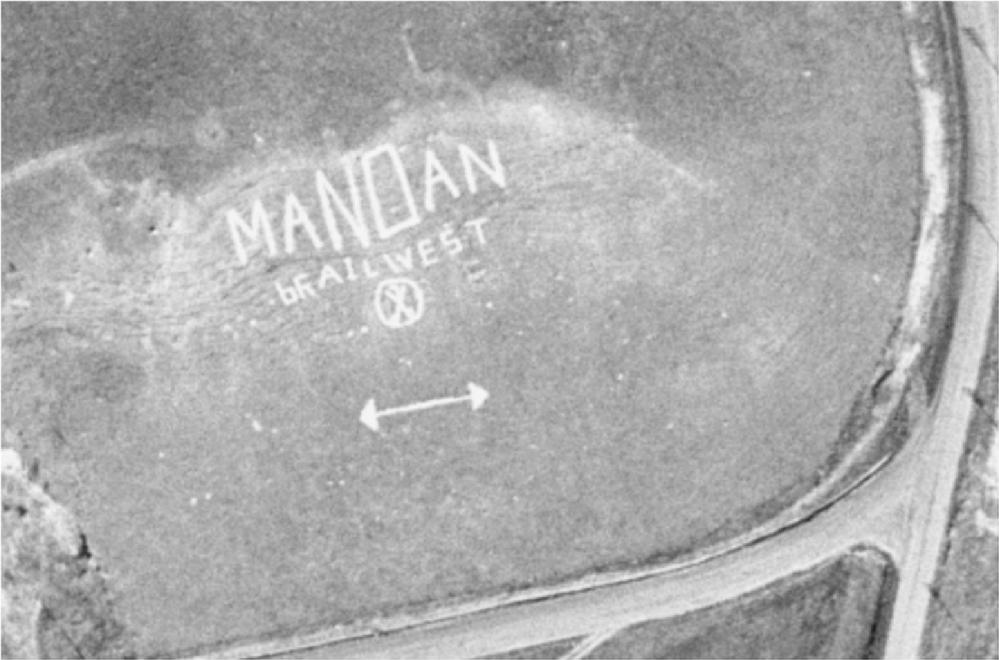
A view of Crying Hill from above in the 1930s.
Crying Hill: A Sacred Natural Landmark
Where The Hidatsa Became Two Tribes
Edited by Dakota Wind
Mandan, N.D. - In 1919, Colonel Alfred Burton Welch, a World War I veteran came to call the city of Mandan, N.D. home. There in Mandan, Welch began a new life as a store keeper, he also served as the post master, and founded the El Zagel Shrine. He spent the remainder of his life in the rolling hills of Heart River country along the Missouri River valley, and became fast friends with many of the Indian tribes there.

Captain AB Welch, seen here in his uniform from the 1898 Spanish-American War.

Welch became good friends with Chief John Grass. Grass was a distinguished Sihásapa Lakȟóta leader and veteran of the Sioux campaigns of the 1870s such as the Little Bighorn. Grass was known to the Lakota as Matȟó WatȟákpA, or Charging Bear. He had attended the Carlisle Indian School and became fluent in English to help his people fight the government in the new battlefields, the courtrooms. In March 1913, Grass adopted Welch as his son and bestowed on him Grass’ own name of Charging Bear.

While Welch lived in Mandan he took in all the lore about the site and more, and recorded as much as he could. One of those site stories he recorded was about the village and people who lived in the Mandan village along the Heart River near to Crying Hill.

Andrew Knudson painted this scene of the Corps of Discovery entering Black Cat's village near Knife River. A similar village would have graced the banks of Heart River below Crying Hill. That village was known to the Mandan as Large And Scattered Village.

The Mandan Indians have lived along the Upper Missouri River for about a thousand years and longer if you take into account their emergence story south of Mandan.

According to Welch, or the stories he attributed to the Hidatsa, Crying Hill is where the Hidatsa split into two distinct tribes. Welch uses the term Gros Ventres to name the Hidatsa. Here’s the story, Feb. 24, 1925:

The Gros Ventre were divided into two bands, and each of these bands followed their own chiefs. One starving winter-time they were reduced, by the absence of game and the failure, or destruction, of their crops, to eating the red seed pods of the wild rose bushes.

But, at last, through the prayers of a holy man among them, one lone, rogue buffalo bull, lean and staggering, wandered close to the village. He was chased and fell in the exact middle of the Heart River. Upon being dragged to the shore, it was decided that the meat should be divided in two equal portions, each band obtain the same amount of meat, bone and hide. When the division was made, one band was aggrieved and claimed that the other party had obtained the fatty portion of the stomach, while they had only the lean part.

The aggrieved band then decided that they would leave the other and go into a country which they would discover, and where they would be their own hunters and use their kill as they saw fit to do. Consequently this band did leave, traveled southwest into the country west of the Black Hills and east of the Big Horn Range, which territory they secured and where they have maintained themselves ever since that day.

These are the people known today as the Crows. They frequently come to visit the Gros Ventre; speak the same language and accept each other as cousins or relatives, but the real Gros Ventre call the crows the “Jealousy People,” on account of the separation, long ago.

Crow Indians Firing Into The Agency by Frederic Remington.

A variation of the story about the separation of the Hidatsa into two tribes came a few years earlier by way of Joe Packineau, Dec. 3, 1923:

“Crow Indians are Gros Ventre. I will tell you how it came about that they do not live together now. “That Indian village site in Mandan, we call it “Tattoo Face.” It is not Mandan village, but Gros Ventre or Hidatsa.

“There were two brothers born in that place a long time ago. One had a tattoo mark on his face like a quarter moon. It started on the cheek and ran down across the chin and up on the cheek on the other side of his face. So the people called him Tattoo Face. He became a very famous man among the Gros Ventre.  His brother was all right, and he was named Good Fur Robe. He also became a very great man and a wise man.

“Good Fur Robe was the one who had the corn seeds first. He gave one grain to each person and told them how to plant and look after the plant. Tattoo Face had tobacco before anyone else.

“Now the best part of a buffalo is his paunch. It is nice to eat. One time there was one buffalo which they killed right in the river there. He dropped dead in the middle of the Heart River when he was killed. The people drew him out for they were hungry. Good Fur Robe was the biggest chief, so he took the paunch when they divided the buffalo up between the two bands.

“That made [the] Tattoo Face people mad so that band decided that they would go away. They did go, and made their home in the country west of the Black Hills after that time.

“People call that people Crows now. But the Hidatsa do not. We call them “The Paunch Jealousy People.”

So the place where these people separated from the Hidatsa, is the Heart River at the Crying Hill (or Tattoo Face Village) which was Gros Ventre. The Mandan lived there too after that, I think.”

Crying Hill is located within the city of Mandan, ND. In 2003, Patrick Atkinson purchased Crying Hill in efforts to save the heritage site from further development. Read about Atkinson’s efforts to preserve Crying Hill. 

Monday, October 21, 2013

Autumn Morning On The Northern Plains

An early fall morning at Theodore Roosevelt National Park.
Autumn Morning On The Northern Plains
A Clean Beginning To A New Day
By Dakota Wind
Missouri River, N.D. - When I went out to start my car this morning, I saw that the sun had not yet arisen. The far horizon was bright orange and pink, the north and south horizon was purple and blue. Most of the sun light was reflected off the clouds in the east from an even more distant sunrise. Because the rising sun was teasing in its great reveal, it seemed like time was frozen in perpetual twilight.

The morning made me think of late fall mornings back on the rez in the days of my youth.

The frost was frozen fast to the windshield of my car. It came off in a couple of passes with the scraper. The frost curled in about it itself like wood shavings. The curls gathered about the top of the window where my scraping stroke ended, there they gradually melted as the windshield warmed the interior.

I scraped in silence. Neighbors had already departed for work. Neighbors’ children had already left for school. My breathing the only sound accompanying the scraping came in puffs. When I was little I used to imagine there was a little fire within me that burned warm. I remember hearing once that long ago, the Lakota thought that the visible breath was also visible spirit. I was never scared that I would lose mine, the fire within somehow kept it close.

I stepped on my freshly shorn lawn cut only a few days ago, and the grass crunched beneath my shoe. The crunch of delicately frozen grass was too great a call to the little boy within me that I stepped some more just for the joy of it and left a trail of crushed steps across the lawn before getting back to my car.

The trees still have some leaves. Indigenous trees like the ancient cottonwood go from shiny green to yellow and then fall. In the summer when the wind blows through the cottonwood the leaves heave in a great constant shush, it’s like the sound of the ocean. The leaves may change color, but after they fall, they continue shushing until snow quiets them, and then the wind changes.

The wind is a constant presence. One can count the number of days without a breeze on one hand. In the summer, you might think that the wind would be a welcome presence on a hot day, but it blows the heat around like a furnace. In the fall, if anything can possibly carry the smell of cold and winter, it’s the wind. It smells cold and distant, but clean too. Any moisture that the wind carries a hint of always smells clean here on the prairie steppe.

Steam off the river filled the Missouri River valley as far up river and down river as the eye could see. Silent undulating waves of fog cascaded in slow motion in the early quiet. Tendrils of fog gently whipped at the confines of the river bank and a few managed to lick the air above the tree line. As a boy I remember being told the steam off the river like this is the spirit of the river, “The river breathes too,” my grandfather said.

A magpie stirred and took flight in the neighbor’s lawn and I’m reminded instantly that meadowlarks no longer wake me in the early pre-dawn. The magpie alights in a nearby tree giving me a view of its snowy white feathers on midnight black ones. The mix of black and white in a world of dawn color is noble.

The moon sets in a sea of deep azure and grey misty clouds in the western sky. Starlight is gradually snuffed out like a campfire, or a candle. The brightest stars twinkle for a moment or two and then quit for the day.

My car is ready and warm by the time I’m ready to get back in. 

Monday, October 14, 2013

Broken Bone Lake, Now Pleasant Lake

Nearby Broken Bone Hill, west of the lake, overlooks Broken Bone Lake, ND. 
KAȞÚĞA MNí: BREAK-INTO-BONE LAKE
PLEASANT LAKE 
By Dakota Wind
Rugby, N.D. – East of present-day Rugby is the Pleasant Lake National Wildlife Refuge. In the early days of statehood, settlers to the area and noticed this modest tree-lined lake. The natural features and shade of the lake seemed agreeable to the settlers and they named it Pleasant Lake.

The Dakȟóta who lived in the area and who, up until the reservation period, hunted in the area, camped frequently along this lake, finding it agreeable as well, and though they found it as pleasant as the settlers, had another name for it: Kaȟúğa Mní, which means To-Break-In-To [as in “Bone”] Lake, which was freely translated as Broken Bone Lake.

A woman prepares a hide in a Dakhota encampment, by Karl Bodmer.

After a successful hunt, the men returned to camp with their quarry where the women quartered and cleaned the carcasses. The hides were carefully stretched and fleshed. Some hides were fleshed and shaved in the sun, whereupon they became rawhide for parfleche boxes and moccasin soles. Hides which were fleshed and tanned with that animal’s brain became hides useful for creating clothing, or for other uses.

Meat is dried and prepared for use over the coming winter months.

After the meat was cut and drying on a rack, becoming “jerked,” and after the hides were prepared for tanning, attention was turned to the bones. The bones were split and broken open to acquire the marrow within, which was then boiled and consumed.

An antler pyramid on the Great Plains by Karl Bodmer.

Sometimes tools were made from the antlers of deer or elk, but sometimes not. In those times when deer or elk antlers were not used, they were piled into an “antler pyramid.” Those places with such pyramids indicated that a regular hunting site was in nearby.

Broken Bone Lake is part of the Pleasant Lake National Willdlife Refuge management area which consists of Pleasant Lake, Broken Bone Lake, Broken Bone Hill, Horseshoe Lake, and Mud Lake. 

Wednesday, October 9, 2013

Philip Deloria Returns To North Dakota

Philip Deloria Returns To North Dakota
An Author And Scholar In His Own Right
By Dakota Wind
Grand Forks, N.D. – I came awake at four in the morning. Sleep sand still thick in my eyes, I managed to roll over and turn off the alarm on my iPhone. I had set it to play “Thor Kills The Destroyer” rather than listen to a blaring alarm so damn early in the morning. I let the song play through completely before tapping the screen, then stretched hard and yawned loud. I rolled into some clothes I set out before I crashed.

I hit the road at 5:00 in the morning. Traffic was light and I managed to gas up my little beast and take to the Interstate in a few minutes. I put on my Def Leppard playlist and before I knew it, the sun was up and I was in Fargo.

In Fargo, I picked up blogger, world traveler, archaeologist, and historian Aaron (The Edge Of TheVillage) who joined me on this day trip to Grand Forks to meet and hear Phil Deloria, author and historian. Phil came to the University of North Dakota as a guest lecturer for a few days and though Deloria and I had conversed online for several years we had never met in person.

Aaron and I stopped in at some hotel where Deloria was staying at and had brunch. I ordered a round of biscuits and gravy with a pile of whipped scrambled eggs and a couple rashers of thick bacon. I have never tasted such fresh biscuits, which were somehow flaky, and with a creamy gravy to go with it. I swear the food tasted like the chef loved his job. I washed it all down with a hearty drought of sweet grape juice.

Aaron probably had bread and water, or something.

I informed Phil we were at the hotel café and he joined us in the lobby. The floor of the halls and lobby were naked tile. Naturally, noises magnified and echoed back and forth, a clatter of dinnerware and silverware sounded like a crash of thunder. Banter amongst the hotel and café staff sounded not dissimilar to a country henhouse.

Phil’s great-grandfather, the Rev. Philip Deloria, was an Episcopal minister on the Standing Rock Sioux Indian Reservation, as was Vine Deloria Sr. My grandfather, Innocent Goodhouse, served as an Episcopal minister too, his time overlapped with the Delorias. Our families used to be close. Ella Deloria, was my mother’s god-mother. Time, distance, and vocations called Vine Deloria Jr. and his son Phil to the ministry and interpretation of American Western history.

St. Elizabeth's Episcopal Church, Wakpala, SD, where Philip Deloria and his son Vine ministered to the Lakota people.

We talk about shared family history, and our families today. It is the Lakota custom to introduce one’s self by lineage, but as Phil and I already know the other’s family and background, we move on to the heart of our visit: the 1863-1864 Sibley-Sully Punitive Campaigns against the Sioux. Deloria’s great-grandfather, Philip Deloria, was the son of Mary Sully, who in turn was the daughter of General Alfred Sully, the antagonist behind the conflicts at Whitestone Hill and Killdeer Mountain.

I ask Phil if he had any family history about General Alfred Sully and why he left his Dakota family behind. He is a straight-shooter in this regard, and says straight up that he doesn’t know. If there was a story, it probably died with Mary.

Phil is working on a family history project, something his father had also tackled. Over coffee and juice (because I don’t drink coffee), Phil shares the story of how his grandfather Vine Sr., met his grandmother through Vine’s sister, Ella. Ella herself, had assumed leadership of the family and thought that she’d always be the one to take care of her little brother Vine.

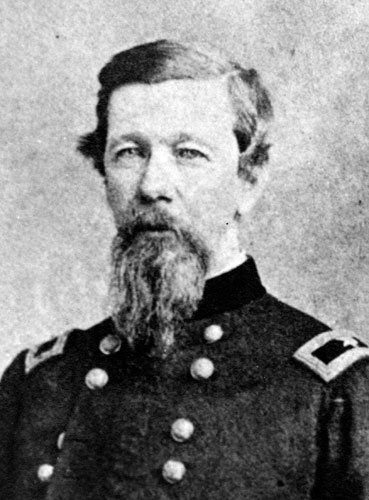
General Alfred Sully. He had a daughter with a Dakota woman, Mary, then left them. One can read about Sully in the book No Tears For The General by Langdon Sully, another of Sully's descendants. The book omits the general's Dakota wife and child.

Phil’s family studies un-apologetically does not include much of General Sully story, other than a brief mention of how an ancestor of Phil’s, Saswe, crossed paths with Sully. Saswe had a vision before the 1862 Minnesota Dakota Conflict that he would kill four of his people, a terrible choice, a lesser of two evils to preserve as many of the Dakota people as he could.

Saswe went into a camp of Dakota, explained that Sully was coming, and that it was his destiny to kill four of his own people. Saswe killed a man after the people listened to him out, and later three others. General Sully took a Dakota woman and had a daughter by her. Saswe had a son, Tipi Sapa, Black Lodge, also known as Philip J. Deloria.

“My grandfather always got a charge out of that,” shares Phil, “The children of two antagonists married one another.”

Though Phil is descended from General Sully, I asked him if he is descended from any of the people who Sully attacked the Dakota at Whitestone Hill or the Lakota at Killdeer Mountain. Phil is not certain, he says, and would have to conduct further research into his background. He does say, however, that one of Saswe’s wives, was from Standing Rock.


I ask Phil about Killdeer Mountain and the energy development currently taking place there and if he’d be able to be there for the 150th commemoration. He teaches a late summer course and his schedule may be tight and it may well be that he can not make it.

Phil is named after his great-grandfather, the Rev. Philip J. Deloria. Among the Dakota and Lakota people, they take everyday legal names and go about their business in the land of the brave, but many keep the traditional names too. Rev. Philip was known among his people as Thípi SápA, Black Lodge.

Phil’s grandfather, the Rev. Vine Sr., was known among his people as OhíyA, Win or Triumph. Vine Jr. carried not just his father’s everyday legal name but also his traditional Lakota name.


Phil comes from a legacy of ministry. His father was a lay reader as well, but answered to the call to indigenous native rights and public education of those rights; among Vine Jr.’s works are God Is Red and Custer Died For Your Sins.

Phil heard the call to action and has pursued a doctorate in history. He is the author of Playing Indian and Indians In Unexpected Places. He is a professor of history and Native American studies at the University of Michigan. Phil carries his family history to his field of work. He can’t not when he’s talking about native studies, especially contemporary native studies in the age of self-determination.

I ask Phil if he has a Lakota name, expecting that he’d tell me he carried his great-grandfather’s Lakota name. He smiles broadly and lets out a small laugh. “My grandfather called me Pšíš,” he said, “It was my grandfather’s boyhood name.” I wonder a moment if Phil liked onions when he was a boy. Pšíŋ is onion, and Pšiŋšíčamna is wild onion.

Gratify yourself and get a copy of Philip Deloria's "Playing Indian."

Our time draws to a close as Phil’s ride to the UND campus arrives. I catch him later to sign my copy of Playing Indian, “Tehansi [male cousin], so great to have connection, and good talk. Hope you enjoy this! Phl Del.”