Showing posts with label Cheyenne. Show all posts

Wednesday, February 14, 2018

Hostiles, A Film Review

Hostiles, A Film Review
“You’re a good man, Charlie Brown.”
By Dakota Wind

Hostiles. Directed by Scott Cooper. Produced by Scott Cooper, Ken Lao, and Jon Lesher. Screenplay by Scott Cooper. Based on a story by Donald Stewart. Music by Max Richter. Starring Wes Studi (Mystery Men, Last of The Mohicans, Geronimo), Adam Beach (Suicide Squad, Windtalkers, Cowboys and Aliens), Q'orianka Kilcher (How The Grinch Stole Christmas, The New World, Longmire), Xavier Horsechief, and Christian Bale (Empire of The Sun, Batman Begins). U.S.A.: Waypoint Entertainment / Le Grisbi Productions / Bloom Media, Dec. 22, 2017. Film. 133 minutes.

American Western films have a checklist, and Cooper’s Hostiles keeps to the basics. Long panning shots of an undeveloped landscape of open plains, streams, and mountains. Guns, cowboys, soldiers, horses, Indians. Check. Unrepentant violence and moody discourse. Check. The anonymity and mystery of The Man with No Name are almost gone in this narrative. The only ones without names or identity beyond who they are are the Comanche. Their presence serves only to offer up a slice of motiveless Indian depredation.

Hostiles is a movie in the tradition of Last of the Mohicans, that is to say, that it is set in a world of political change and violent conflict. As Daniel Day-Lewis learned Mohican, Christian Bale learned Cheyenne for this film. Like Day-Lewis, and by the laws of Hollywood’s western genre, Bale “out Indians the Indians.” He speaks more lines in Cheyenne than all his native counterparts combined. Blocker is a better shot, a better fighter, a better killer. He’s the protagonist so bullets miss him. The only hurt Blocker receives is a guilty conscience, but tell him he’s a good man and he falls apart.

Hostiles is largely about Blocker. How can he live in a post Civil War, post Indian Wars, America? His paternalistic needs are indulged twice: taking care of the widow Mrs. Quaid and taking care of the last Cheyenne prisoner, a boy named Little Bear. Rosamund Pike’s Mrs. Quaid can wail. She’s allowed. Mrs. Quaid’s pain and fears are fully explored. Blocker’s and Quaid’s growing affection for each other is chaste.

Cooper delivers a fine western film, but he’s paralyzed with what to do with its native cast. Studi’s Yellow Hawk and Beach’s Black Hawk, are little explored. Their narrative is constructed only from interaction with Blocker. Their narrative isn’t even their own to tell. Their struggle, their imprisonment, their pain, their recovery, and their deaths need Blocker, and that’s what hobbles what could have been a great story.

At one point Blocker says, “When we lay our heads down out here, we’re all prisoners.” There is a difference in his imprisonment and the Cheyenne’s. Blocker’s prison of obligation comes to a conclusion. Maybe he lives in a mental and emotional prison. The Cheyenne are prisoners, even when they are set free.

Cinematographer Masanobu Takayanagi’s presentation of the vast open landscape is poetry. He captures the majesty of Studi’s Indian Head Nickle profile from the Cheyennes' concentration at Fort Berringer in Arizona to his burial at the Valley of the Bears in Montana.

Max Richter delivers a spooky, ambient, and minimalist western score. Richter’s “Scream at the Sky,” sounds like a broken heart should, shattered and desperate. “Never Goodbye” is an emotional punch, brimming with the soul of peace and sadness.

The highlight of the film rests on the shoulders of the innocent. He too is given very little narrative in this story, but at the conclusion of the film, when Little Bear has lost his family and he’s under the care of Mrs. Quaid (paternalism), Blocker gifts him with a book about Julius Caesar. Before Little Bear accepts Blocker’s western token, he raises his hands and offers Blocker the traditional Plains Indian sign of gratitude.

Little Bear has no words, perhaps at Cooper’s direction, perhaps because Cooper wouldn’t know what Little Bear should say, but this single moment is more beautiful, powerful, and perfect than Blocker’s and Quaid’s changing resolve to the Indian plight.

I don’t know Cooper’s intended audience. Maybe it wasn’t supposed to be me. The story’s narrative revolved around two characters and their struggles with redemption, but this wasn’t enough. I like western films. I also like to ask, “Where're the Indians?” when watching westerns, but Hostiles left me wanting more than Cooper could deliver. It would make a good rental.


Saturday, October 7, 2017

Powwow Highway, A Film Review

Powwow Highway (1989)
Authentic Film About Modern Indians
By Dakota Wind
Powwow Highway. Directed by Jonathan Wacks. Produced by Jan Wieringa, George Harrison, and Dennis O'Brien. By David Seals, Janet Heaney, and Jean Stawars. Performed by A. Martinez, Gary Farmer, and Amanda Wyss. U.S.A.: Handmade Films / Warner Bros., Feb. 24, 1989. Film. 87 minutes.

When Powwow Highway (PH) hit the Pheasant Drive-In Theater in Mobridge, SD, in the spring of ’89, my maternal grandparents took my brother and me to see it. I remember an impatient evening, waiting for sundown, and then a sense of growing anticipation for darkness to descend on a largely vacant parking lot. I watched it again, and made my sons watch it with me.

It’s low budget, made in the ‘80’s, and set on the Northern Cheyenne Indian Reservation in Montana. And it’s a buddy road trip movie. It’s the biggest movie to come out featuring natives since ‘83’s Triumph of a Man Called Horse, and unlike ‘Horse, PH holds up fair.

If one has spent considerable time on a reservation, one experiences a ten to twenty year time lag, and as a result, PH time is ambiguous enough to have been filmed in the ‘70’s or the turn of the twenty-first century. The clothing (lots of denim, apparently Indians like to wear jean anything), vehicles (rusty “rez” cars and pick-ups on the verge of falling to pieces are still driven today, and probably without insurance too), and depressing, crowded homes (project homes built cheaply and without variation) are as much a part of genuine Native American reservation life as the film exposes.

The protagonist, a hot-headed Buddy Red Bow (named in honor of the Oglála Lakȟóta musician activist) attends a tribal council meeting in Lame Deer, MT and advices his people (the Northern Cheyenne) against a new strip mining contract – in real life, the Northern Cheyenne passed a Class I Clean Air Act on their reservation, which was challenged by the strip mining town, Colstrip, MT (located just north of Lame Deer, off the reservation) which was challenged and taken all the way to the US Supreme Court, who ruled in favor of the Northern Cheyenne, which required that Colstrip install filters on all their stacks. There’s more to this story, and I couldn’t appreciate the details as a punk kid).

The Rez runner "Protector," or Philbert's war pony. Your reservation experience isn't real until you've ridden in one. 

Buddy’s sister is set up for possession of illegal drugs during a traffic stop, and the police officer knows just where to look for the stuff when he pulls her over. Buddy needs to get his sister and her kids out of New Mexico and back to Montana, but he’s unable to get there and back again with just enough money to make bail too, so he enlists his part-time friend and recovering alcoholic. Enter: the eccentric Philbert, who works in a vision quest and gathers traditional medicine along the way.

Philbert sleeps nude. He loves food, and leaves a Hershey’s chocolate bar as an offering to the ancestors in his hero’s journey. Philbert looks at a field of rusty, broken, peeling, junked cars out of a filthy window and sees a herd of horses. He trades his weed for a spotted war pony. His car is practically a character in itself, and is a humorous, yet genuine, addition as the protagonists’ vehicle: Protector.

The film reaches its climax when Buddy and Philbert rescue Buddy’s sister Bonnie. Buddy finds his “medicine” when he chooses to stand and face down a police car, and Buddy unexpectedly transforms into a warrior – Protector’s window becomes a tomahawk – when he leaps into the air to protect his own. Reality is suspended for just a moment, or maybe it’s the viewers’ turn to see Buddy as he sees himself.

PH is categorically a drama; maybe it is too serious at times to be a comedy, but it isn’t dark. Nor is PH a tragedy. The fact is, this is a quintessential ‘80’s low budget “B” movie. The acting is great, but this is a “B” movie, and there has to be some stilted, wooden acting. Thankfully, Joanelle Romero steps in to cement this “B” movie’s status, but her scenes are few and fast.

PH isn’t bad enough of a “B” movie, and nor does it have popular “cult” movie status, so it will never be riffed on Mystery Science Theater 3K. It doesn’t need any of that. It’s not high art. It’s a good escape at about eighty-plus minutes. Go see it. 

Dakota Wind is an enrolled member of the Standing Rock Sioux Tribe. He is currently a university student working on a degree in History with a focus on American Indian and Western History. He maintains the history website The First Scout.


Friday, September 23, 2016

Historical Conflict And Trade At Cannonball River, A Review


Challenges And Conflict On The Cannonball
Confluence Of Indians & Traders, A Review
By Dakota Wind
Cannonball, ND – Is the Cannonball River so different today than it was two hundred years ago? Yes and no. The river still drains into the Missouri River as it has done for thousands of years, but the similarities depart from there. The Cannonball River drains into a stretch of the Missouri River that is more lake now than flowing stream.

600 years ago, the Mandan lived in two earthlodge villages, the Big River Villages, on the north and south banks at the Cannonball River and Missouri River confluence. The Cheyenne lived in an earthlodge village located at present-day Fort Yates, ND, and occupied the region including the Cannonball River from around 1700 to about the turn of 1800 before taking up the nomadic horse culture for themselves and moving west. The Arikara contested the Cheyenne occupation, and even came to live at the Big River Village on the north bank for a time.

Tracy Potter’s “Sheheke: Mandan Indian Diplomat” offers a summary of the backstory which sets up the Mandan Indian protagonist Shehek Shote (“White Wolf;” aka Sheheke, or “White Coyote”) in the post-contact and early trade era on the Upper Missouri River. Potter references living oral tradition of the Mandan people, and archaeology of the ancient territory of the Mandan, as well as writings from the early fur traders including the Corps of Discovery to show the struggle and survival of the Mandan on the prairie steppe.

Potter’s teeters back and forth between a biographical epic of White Wolf who journeyed east to parlay with President Jefferson and his return, and a historical summary of the Mandan people. The tale concludes with a grand gesture of self-sacrifice and service to a country that has largely forgotten that White Wolf died protecting Americans on the frontier when the War of 1812 spread to the Missouri River.

Sheheke: Mandan Indian Diplomat was released in 2003 as a companion book to all the Corps of Discovery excitement during the Lewis & Clark Bicentennial. Its a genuine original concept, with a focus on the story of a native man, a civil chief of a peaceful first nation, at a time when a dozen books a month were coming out about the Corps of Discovery. It’s 2016 and Potter’s book deserves a second closer look at its brief narrative involving the conflicts on the Cannonball River in light of the current energy interests there.

Inter-tribal conflict is a part of the collective history of the first nations. Different languages yield different world views and values, which may lead to conflict, but contests for control of natural resources is universal in the history of humanity anywhere in the world at any time.

During the Corps of Discovery’s mission, they selected various tribal leaders to journey downriver and east to meet with the great father of the new United States. In 1804, the corps selected Arketarnawhar Was-to-ne (“Is A Whippoorwill”) and a company of six others from the Osage, Missouri, and Pawnee nations, to entreat with President Jefferson. Is A Whippoorwill died in the spring of 1805; the other tribal representatives soon died as well. Jefferson wrote a missive telling the Arikara that their beloved leader had promised their friendship to the Americans before dying, and that he was buried in the east.

The Arikara received official word of their leader’s death in the summer of 1807. By then, the Arikara and Mandan were at war with one another. One of the conflicts between the two nations was at the Cannonball River, where the Mandan had fought the Arikara and killed two of their warriors. The Mandan wanted and supported trade with the Americans; the Arikara wanted the same too, but wanted their leader back more.

In the fall of 1812, war tension spread west. The Hidatsa supported the English in their trade. The Mandan supported trade with the American Fur Company. The Arikara indiscriminately harassed all white trappers and traders on the Upper Missouri. The Cheyenne were withdrawing from the Missouri River for the deep west, but lingering trade drew them back to the Missouri River. The American Fur Company had set up shop with Fort Manuel Lisa near present-day Kenel, SD near the ND-SD border.

The Arikara reported to a Fort Manuel trader that the Cheyenne had robbed and whipped a trader at the Cannonball. The trappers were so nervous when the sun went down, they shot a skulking dog thinking it was a Cheyenne. What’s not reported, is the Cheyenne were lied to and robbed in trade themselves. Their retaliation was just. They didn’t kill the trader, only suffered him to be humiliated for his corrupt dealings. Some of the Cheyenne were still on good terms with the traders at Fort Manuel Lisa and had planned on wintering there in 1812-1813.

Fort Manuel Lisa was attacked and burned in December 1812. Lisa and his men, even the Cheyenne were anticipating attack from the Arikara, but it was the Thítȟuŋwaŋ (“Teton”), persuaded by English trade agent Col. Robert Dickson who had married into the Očhéthi Šakówiŋ (“Seven Council Fires;” Great Sioux Nation), who carried the fight to the trade fort.

Potter’s “Sheheke: Mandan Indian Diplomat” is a wonderfully short historical book in clear light prose, but it’s deep and rich enough for serious study. His book is dedicated to the Mandan people and includes many Mandan and Hidatsa descendants in his acknowledgements. Get your copy from the North Dakota Heritage Center & State Museum store. The book isn’t listed on the website, but it’s available on the floor. Get your copy today! 


Friday, July 26, 2013

The Sheyenne River Or The Cheyenne River

The Upper Sheyenne River in North Dakota.
The Sheyenne River Or The Cheyenne River
Šahiyela Ožú Wakpá Naíŋš Wakpá Wašté
By Dakota Wind
Bismarck, N.D. – In the Land of Forever, the land of wind, there are two rivers which bear the same name in English, but have two completely different names in Lakȟóta, yet each river was once called home by the Šahiyela (Red Talkers; Cheyenne) long ago.

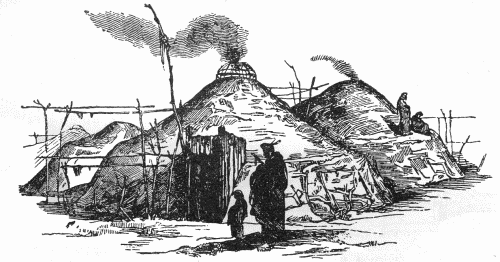
The Sheyenne River in North Dakota was known to the Dakota and Lakota as the Šahiyela Ožú Wakpá, The River Where The Cheyenne Planted. A long time ago, the Cheyenne, or Tsitsistas, “Human Beings” as they name themselves, lived in earth lodge villages along what became the Sheyenne River in North Dakota.


A view of the Sheyenne River in Ransom County, N.D.

Like other earth lodge cultures of the Great Plains, the Cheyenne planted corn, squash, and beans in gardens on the flood plain of the river. There was once a great Cheyenne village at the great bend of the river in Eddy County. At some point in their history, after they moved west to the Mníšoše (Water-Astir; Missouri River), and at the turn of the nineteenth century, the Cheyenne abandoned their sedentary lifestyle in favor of a nomadic one, like the Thítȟuŋwaŋ (Teton; Plains Dwellers).


The Cheyenne River in South Dakota.

The Cheyenne moved west to the Mníšoše and lived along the river between present-day Fort Yates, ND and the present-day Cheyenne River. Their villages were abandoned a year or two before the Corps of Discovery ascended the Missouri River. But they lived there when the French arrived in the 1730s, and later when the Spanish and English arrived to trade. It was possible that disease from contact drove them west, much as smallpox drove the Mandan to move north to Knife River.

In early maps of explorers and traders, the river where the concentration of Cheyenne lived along the “Cheyenne River,” the river was named so.

What the Cheyenne called the Sheyenne River or the Cheyenne River is beyond me.

For the Lakȟóta, the Cheyenne River was known simply as Wakpá Wašté, or The Good River.

Wednesday, April 20, 2011

War Correspondence from the Front Line: The Battle of the Rosebud

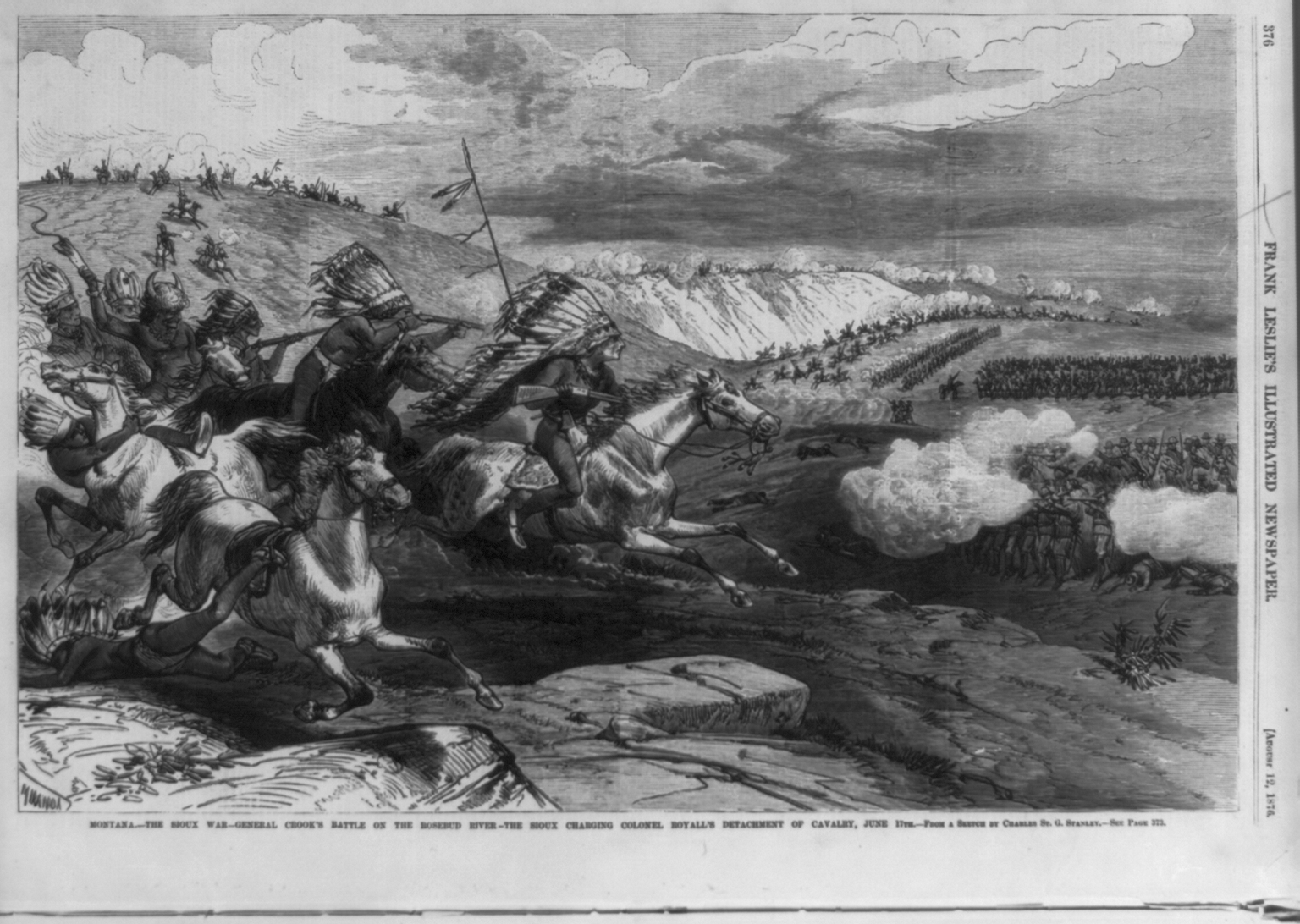
"Sioux charging at Battle of Rosebud," by Charles St. G. Stanley.
War Correspondence From The Front Line
The Battle Of The Rosebud, 1876

By Dakota Wind
Author and historian, Peter J. Powell collects the Cheyenne oral traditions about the Battle of the Rosebud in his resource "People of the Sacred Mountain." Therein is a story about how a Cheyenne maiden who witnessed her brother fall off his horse during the fight. She promptly jumped on a horse and rose into the crossfire to save him. The Cheyenne refer to the Battle of the Rosebud as "The Girl Who Saved Her Brother Fight."

Author and historian, Jerome Greene also has a wonderful resource utilizing Lakota and Cheyenne oral traditions about the Rosebud, the Battle of the Little Bighorn and other fights in his resource "Lakota and Cheyenne: Indian Views of the Great Sioux War, 1876-1877."

In 1890, Joseph F. Finerty a war correspondent for the Chicago Times, published a collection of his narratives from 1876 through 1879 titled “War-path and Bivouac, or the Conquest of the Sioux.” Here follows an excerpt:


Dawn had not yet begun to tinge the horizon above the eastern bluffs, when every man of the expedition was astir. How it came about, I know not, but, I suppose, each company commander was quietly notified by the headquarter’s orderlies to get under arms. Low cooking fires were allowed to be kindled, so that the men might have coffee before moving farther down the cañon, and every horse and mule was saddled and loaded with military despatch. Finerty notes that the Indians had a feast the night before and that the following morning the Crow were reluctant to go forward to meet the Sioux and Cheyenne, the Shoshone, however, showed some “martial alacrity.” They [the Cavalry and Scouts] got their horses ready, looked to their arms, and, at last, in the dim morning light, a large party left camp and speedily disappeared over the crests of the northern bluffs.

Finerty describes the Infantry moving out with their mules and other equipment. The Cavalry being generally bored and some even taking naps in the saddle until they all began with the “regularity of a machine complicated.” We marched in this fashion, the cavalry finally outstripping the infantry, halting occasionally, until the sun was well above the horizon. At about 8 o’clock, we halted in a valley, very similar in formation to the one in which we had pitched our camp the preceding night. Rosebud stream, indicated by the thick growth of wild roses, or sweet brier, from which its name is derived, flowed sluggishly through it, dividing it from south to north into almost equal parts. Our battalion (Mill’s) occupied the right bank of the creek, with the 2d Cavalry, while on the left bank were the infantry and Henry’s and Van Vliet’s battalions of the 3d Cavalry. The pack train was also on that side of the stream, together with such of the Indians as did not move out before daybreak to look for the Sioux, whom they were by no means anxious to find. The young warriors of the two tribes were running races with their ponies, and the soldiers in their vicinity were enjoying the sport hugely.


At 8:30 o’clock, without any warning, we heard a few shots from behind the bluffs to the north.  “They are shooting buffalo over there,” said the Captain [Sutorius]. Very soon we began to know, by the alternate rise and fall of the reports, that the shots were not all fired on one direction. Hardly had we reached this conclusion, when a score or two of our Indian scouts appeared upon the northern crest, and rode down the slopes with incredible speed. “Saddle up, there - saddle up, there, quick!” shouted Colonel Mills, and immediately all the cavalry within sight, without waiting for formal orders, were mounted and ready for action. General Crook, who appreciated the situation, had already ordered the companies of the 4th and 9th Infantry, posted at the foot of the northern slopes, to deploy as skirmishers, leaving their mules with the holders. Hardly had this precaution been taken, when the flying Crow and Snake [Shoshone] scouts, utterly panic stricken, came into camp shouting at the top of their voices, “Heap Sioux! Heap Sioux!” gesticulating wildly in the direction of the bluffs which they had abandoned in such haste. All looked in that direction, and there, sure enough, were the Sioux in goodly numbers, and in loose, but formidable array. The singing of the bullets above our heads speedily convinced us that they had called on business. Finerty doesn’t run out of adjectives to describe the bravery and fortitude of his company; Finerty never holds his callous estimation for the “inferior” race in check, clearly showing present day readers he was a man of his time. “Why the d---l don’t they order us to charge?” asked the brave Von Leutwitz. “Here comes Lemley (the regimental adjutant) now,” answered Sutorius. “How do you feel about it, eh?” he inquired, turning to me. “It is the anniversary of Bunker Hill,” was my answer. “The day of good omen.” “By Jove, I never thought of that,” cried Sutorius, and (loud enough for the soldiers to hear) “It is the anniversary of Bunker Hill, we’re in luck.” The men waved their carbines, but didn’t cheer. Lemley came bounding up on his horse. “The commanding officer’s compliments, Colonel Mill!” he yelled. “Your battalion will charge those bluffs on the center.”

Mills shouted the charge, and Troops A, E, I, and M went to meet the Sioux on the bluff. At about fifty paces the Sioux line broke. When Mills and his troops reached the crest of the bluff, they immediately formed a line. General Crook ordered the 2nd Battalion of the 3rd Cavalry under Col. Guy V. Henry to charge the right flank of the broken Sioux line.

General Crook kept five troops of the 2d Cavalry, under Noyes, in reserve, and ordered Troops C and G of the 3d Cavalry, under Captain Van Vliet and Lieutenant Crawford, to occupy the bluffs on our left rear, so as to check any movement that might be made by the wily enemy from that direction. General Crook estimated that they faced a Sioux force of about 2,500 warriors. The Sioux reformed another line on the second line of heights from Rosebud Creek. Finerty suggests that it was likely Crazy Horse directing and signaling the Sioux with a pocket mirror. Under Crook’s orders, our whole line remounted, and, after another rapid charge, we became masters of the second crest. When we got there, another just like it rose on the other side of the valley. There, too, were the savages, as fresh, apparently, as ever. We dismounted accordingly, and the firing began again. Colonel Mills, who had active charge of our operations, wished to dislodge them. The firefight shifted from Mills’ position to Maj. Evan’s position to the left. Mills led a charge into the valley under cover of the rocky terrain there. The Crow and Shoshone joined the fight led by Maj. Randall. The two bodies of savages, all stripped to the breech-clout, moccasins, and war bonnet, came together in the trough of the valley, the Sioux having descended to meet our allies with right good will. They began a most exciting encounter. Our regulars did not fire because it would have been sure death to some of the friendly Indians, who were barely distinguishable by a red badge which they carried. An Infantryman, Sergeant Van Moll joined the fight. Finerty found it strange that casualties on both sides couldn’t have exceeded more than twenty-five; he also remarks that war cries were constant on both sides. Since this fight was an “Indian” fight, one could safely speculate that the warriors on both sides were fighting for war honors, such as counting coup.

Sergeant Van Moll found himself fighting alone, when the Shoshone and Crow fled from the Sioux. A diminutive Crow scout, “Humpy,” made a bold rescue of Van Moll – and returned to the cheers of all the Cavalry and Scouts.

In order to check the insolence of the Sioux, we were compelled to drive them from the ridge. Colonel Royall met with difficulty on his front. Captain Vroom was deceived by the terrain and became overwhelmed. Lieutenant Foster and Lieutenant Morton, and Captain Andrews (Troop I) extricated Vroom. In repelling the audacions [sic] charge of the Cheyennes upon his battalion, the undaunted Colonel Henry, one of the most accomplished officers in the army, was struck by a bullet, which passed through both cheek bones, broke the bridge of his nose and destroyed the optic nerve in one eye. His orderly, in attempting to assist him, was also wounded, but temporarily blinded as he was, and throwing blood from his mouth by the handful, Henry sat his horse for several minutes in front of the enemy. He finally fell to the ground, and, as that portion of our line, discouraged by the fall of so brave a chief, gave ground a little, the Sioux charged over his prostrate body, but were speedily repelled, and he was happily rescued by some soldiers of his command.

As the day advanced, General Crook became tired of the indecisiveness of the action, and resolved to bring matters to a crisis. He rode up to where the officers of Mill’s battalion were standing, or sitting, behind their men, who were prone to skirmish line, and said, in effect, “It is time to stop this skirmishing, Colonel. You must take your battalion and go for their village away down the cañon.” “All right, sir,” replied Mills, and the order to retire and remount was given. The Indians, thinking we were retreating, became audacious, and fairly hailed bullets after us, wounding several soldiers. Our men, under the eyes of the officers, retired in orderly time, and the whistling of the bullets could not induce them to forget that they were American soldiers. Under such conditions, it was easy to understand how steady discipline can conquer mere numbers. 

The bluffs, on both sides of the ravine, were thickly covered with rocks and fir trees, thus affording ample protection to the enemy, and making it impossible for our cavalry to act as flankers. We began to think our force rather weak for so venturous an enterprise, but Lieutenant Bourke informed the colonel [Mills] that the five troops of the 2d Cavalry, under Major Noyes, were marching behind us. A slight rise in the valley enabled us to see the dust stirred up by the supporting columns some distance in the rear.

The day had become absolutely perfect, and we all felt elated, exhilarated as we were by our morning’s experience. Nevertheless, some of the more thoughtful officers has their misgivings, because the cañon was certainly a most dangerous defile, where all the advantage would be on the side of the savages. 


Noyes, marching his battalion rapidly, soon overtook our rear guard, and the whole column increased its pace. Fresh signs of Indians began to appear in all directions, and we began to feel that the sighting of their village must be only a question of a few miles further on. We came to a halt in a kind of cross cañon, which had an opening toward the west, and there tightened up our horse girths, and got ready for what we believed must be a desperate fight. Finerty remarked that Gruard’s keen ears heard gunfire toward the “occident.” Major A. H. Nickerson raced to where Colonel Mills and other officers were on the bluffs.

“Mills,”he [Maj. Nickerson] said,”Royall is hard pressed, and must be relieved. Henry is badly wounded, and Vroom’s troop is all cut up. The General orders that you and Noyes defile by your left flank out of this cañon and fall on the rear of the Indians who are pressing Royall.” This, then was the firing that Gruard had heard.


Crook’s order was instantly obeyed, and we were fortunate enough to find a comparatively easy way out of the elongated trap into which duty had led us. We defiled as nearly as possible, by the heads of companies, in parallel columns, so as to carry out the order with greater celerity. They carefully moved around boulders and fallen timbers. When they crested the crown of the plateau, they could hear the attack on Royall’s troop. “Prepare to mount - mount!” shouted the officers, and we were again in the saddle. Then we urged our animals to their best pace, and speedily came in view of the contending parties. The Indians had their ponies, mostly guarded by mere boys, in rear of the low, rocky crest which they occupied. The position held by Royall rose somewhat higher, and both lines could be seen at a glance. There was very heavy firing, and the Sioux were evidently preparing to make an attack in force, as they were riding in by the score, especially from the point abandoned by Mill’s battalion in its movement down the cañon, and which was partially held thereafter by the friendly Indians, a few infantry and a body of sturdy mule packers, commanded by the brave Tom Moore, who fought on that day as if he had been private soldier. Suddenly the Sioux lookouts observed our unexpected approach, and gave the alarm to their friends. We dashed forward at a wild gallop, cheering as we went, and I am sure we were all anxious at that moment to avenge our comrades of Henry’s battalion. But the cunning savages did not wait for us. They picked up their wounded, all but thirteen of their dead, and broke away to the northwest on their fleet ponies, leaving us only the thirteen “scalps,” 150 dead horses and ponies and a few old blankets and war bonnets as trophies of the fray. Our losses, including the friendly Indians, amounted to about fifty, most of the casualties being the 3rd Cavalry, which bore the brunt of the fight on the Rosebud. Thus ended the engagement which was the prelude to the great tragedy that occurred eight days later in the neighboring valley of the Little Big Horn.


According to the Biographical Directory of the United States Congress, Finerty was born in Galway, Ireland, 1846, immigrated to the United States in 1864 and immediately enlisted in the Ninety-Ninth Regiment of the New York State Militia. During the “Indian Wars,” Finerty corresponded with at least three newspapers, most often with the Chicago Times, during the “Indian Wars” from 1876-1881. He established his own weekly paper, the Citizen in 1882 and the following year was elected to the Forty-eighth Congress as an Independent Democrat. He died in June of 1908 and was interned in Cavalry Cemetery , Chicago, Ill.

Wednesday, March 30, 2011

Enemies Or Allies: Conflict On The Great Plains

"Fur traders in canada 1777," by William Faden, 1776.
Enemies Or Allies
Conflict On The Great Plains
By Dakota Wind
GREAT PLAINS - This paper originally appeared in the Fort Abraham Lincoln Foundation's quarterly "The Past Times," Vol. IX, No. 4. 

Sometime in 1615 French explorers made first contact with the Algonquin-speaking Anishinabe. The Anishinabe, like many native peoples, refer to themselves as “The People, and like other tribes, break themselves down into bands. This particular tribe or band of Anishinabe call themselves Ojibwe, meaning “Puckered Moccasins,” in reference to how they made their moccasins. The French couldn’t easily say Ojibwe and instead referred to them as “Chippewa.”

France’s new world empire was built on the fur trade and they badly needed Indian allies to help sustain it. Went the French came up the St. Lawrence River, they encountered the Chippewa. The Chippewa were stunned with their first encounter and their oral traditions reflect stories of men they thought were bears at first “walking off of a floating island,” and when the trappers took a meal of wine and biscuits the Chippewa thought they were drinking blood and eating wood.

They Came For Gold Then Stayed For Fur
At first Europeans came for gold, when little or none was found, natural resources like fur became a substitute. The French wanted furs for trade and profit, the natives wanted guns to hunt and expand their territories.

Beginning at the turn of 1600 traditional skirmishes over territories escalated into the one-hundred years long conflict, the Beaver Wars. The Iroquois allied themselves with the Dutch for their supply of guns, the Algonquin with the French. The Iroquois made war on the Huron in the Great Lakes and by 1649, with the assistance of disease, destroyed the Huron confederacy. As the Iroquois battered the Huron, the Chippewa braced for war and looked west to the territories of their enemies there.

A lot happened at the turn of 1600. Two groups of people either moved or were forced out of the lower Great Lakes region, the Hidatsa and the Catawba, both tribes Siouan speakers, both would probably cringe at being identified as anything Sioux. The Hidatsa moved west to the upper Missouri to live with the Mandan. The Catawba who have the oral tradition say that they were pushed south over the Appalachian Mountains by the Iroquois.

What the Chippewa called the Iroquois before Beaver Wars is no longer recalled. What they called the Iroquois during and after the wars is recorded as “Nadowaysws,” or “The True Adders.” The Chippewa called their enemies in the western half of the Great Lakes “Nadowaysuaig” or “Nadowaysuis,” translated as Snakes-In-The-Grass or the Lesser Adders. The French couldn’t quite say either word in Chippewa and instead used an adopted short form of the word, “Sioux.”

It was about 1640 when the Assiniboine Sioux broke away from the main body of the Great Sioux Nation. The Great Sioux Nation is made up of four Dakota tribes, the Mdewakaŋton, Sisetowon, Waĥpėtowon, Waĥpėkutė, two Wiceyena tribes, the Ihankton and Ihanktowana, and the Teton.

The Seven Council Fires
Members of the the Great Sioux Nation today refer to themselves as Oċėti Śakowiŋ, or the Seven Council Fires. The Seven Council Fires consist of the Dakota (Mdewakaŋton, Sisetowon, Waĥpėtowon, & Waĥpėkutė), Nakota (Ihaŋktowon & Ihaŋktowana; the French called them “Yankton” & “Yanktonai”), and the Lakota (Tetonwon, whom are the most numerous and are organized into seven sub-tribes: Huŋkpapa, Sihasapa, Itażipċo, Mniconjou, Oohėnuŋpa, Śiċaŋġu, & Oglala).

The Assiniboine have the oral tradition that recalls a fight over meat and broke off from the Yanktonai. This infighting occurred during the Beaver Wars and as the Chippewa were pushing west for territory and furs. Natural resources became scarce forcing people to fight back, move further west, or starve. In one generation, the Assiniboine moved northwest and allied themselves to the Plains Cree and Piegan. The Assiniboine were ever after known to the main body of Sioux as Hohė, or rebels.

In 1659-60 the French explorers Pierre Esprit Radisson and Medard Chouart Sieur des Groseilliers journeyed west to Lake Superior and Lake Michigan followed by Jesuit missionaries twenty years later. In 1680 the Jesuits Hennepin and Duluth made contact with the Sioux in northern Minnesota at the height of conflict between the Sioux and Chippewa at Mill Lac. The Okdada Dakota moved west to the Missouri River where, in a generation, changed their lifestyle from sedentary horticulture and hunting to nomadic hunting so completely, changed their dialect, that they came to be called Oglala Lakota.

The Confluence Of Guns And Horses
Armed with guns from trade with the English, the Lakota arrived on the plains at nearly the same time as horses, 1692, and took complete advantage of both to the dismay of all tribes on the northern plains, all but the Cheyenne.

When the Sioux came to dwell on the plains the only tribe with whom they didn’t have an antagonistic relationship with were the Tsistsistas, who the Sioux referred to as Śahiyėna, or Cheyenne, meaning “Red Talkers.” The relationship didn’t remain friendly for long.

Horse stealing raids and skirmishes to gain and control territory became the lifestyle of the Lakota in the early eighteenth century. The first recorded horse stealing raid was against the Hėwaĥtoĥta, the Hidatsa, in 1706. Then a war with the Mandan followed.

In fact, so many horse stealing raids occurred in the first half of the 18th century that when Pierre La Verendrye made first contact with the Mandan there were no horses to barter for. La Verendrye walked his entire stay on the northern plains. 

War between the Sioux and Cheyene broke out around 1740 and lasted until 1766 when a war party of Oglala Lakota attacked a Cheyenne village near present-day Fort Yates, North Dakota. The Cheyenne retaliated by setting fire to the plains. The Oglala’s horses broke free and they were forced to abandon camp and run cross country. The Oglala were forced to run in the flames as the fire caught up to them. They who survived the running the fire jumped into Long Lake. This band of Oglala became known afterward as the Śiċaŋġu, whom the French called Brulė, or Burnt Thigh. The Sioux and Cheyenne put aside their differences and became allies.
____________________
Bibliography:

Tenth Annual Report of the Bureau of Ethnology to the Secretary of the Smithsonian, 1888-'89, paper by Garrick Mallory, edited by J. W. Powell.

Fifteenth Annual Report of the Bureau of Ethnology to the Secretary of the Smothsonian, 1894-'95, paper by W. J. McGee.

Siouan Sociology, by James Owen Dorsey prepared in the 1890s. Paper published in The Sioux Indians: A Socio-Ethnological History, an introduction by John F. Bryde, Ph.D., edited by Sol Lewis, 1973.

Yanktonai Ethnohistory and the John K. Bear Winter Count, paper by James Howard, Plains Anthropologist, 1976.